People make mistakes because people are human. When we label people as “good” or “bad,” we can feel shocked when someone we love does something we believed was unimaginable. Infidelity serves as a clear example — it’s a topic that frequently arises in the couples work I do. Understanding the complexities of human relationships, including the factors that can lead to infidelity, is crucial in addressing the pain it causes and the path to recovery, including the vital step of letting go of resentment.
To illustrate the journey of forgiveness, consider the story of a woman named Sarah. After discovering her partner’s infidelity, Sarah felt an overwhelming sense of betrayal and anger. Initially, she blamed him for the breakdown of their relationship, allowing resentment to fester. However, through therapy, she learned to express her feelings and set boundaries. Over time, Sarah discovered the importance of understanding the factors that led to her partner’s actions, which included unresolved personal issues and stressors in their relationship. This insight helped her to navigate her emotions more effectively.
As Sarah practiced forgiveness, she focused on her healing rather than her partner’s mistakes. She embraced techniques like journaling and mindfulness to process her feelings. Ultimately, she chose to forgive not to excuse her partner’s behavior but to reclaim her emotional well-being. Now, Sarah shares her story with others, emphasizing how forgiveness freed her from the shackles of resentment, allowing her to embrace a new chapter in her life filled with peace and potential.
Letting go of resentment is also a significant aspect of this journey. It allows individuals to not only heal themselves but also to move forward in their relationships.
Stories like Sarah’s highlight that forgiveness is a personal journey. Each individual’s path may vary, but the core principles remain the same: acknowledging hurt, taking responsibility, setting boundaries, and ultimately choosing to let go for the sake of one’s mental health and happiness.
In the Therapy Room
As a couples therapist, I often meet partners facing a betrayal: one spouse has cheated; the other can’t trust them. During our sessions, I gather history, clarify treatment goals, and listen for what both hope to build — intimacy, connection, trust, and ultimately, repair. However, there’s something significant standing in the way:
- Resentment and animosity — these feelings can create an emotional chasm between partners.
- Grudges and blame — holding onto grievances can prevent healing.
- Feelings of betrayal, guilt, and shame — these emotions can cloud judgment and hinder progress.
These reactions are part of the human experience. While they can break relationships, when faced and worked through, they can become the very pressure that forges resilience and long-lasting bonds. Couples often discover that navigating this difficult terrain together can either strengthen their relationship or highlight fundamental issues that need addressing.
What Forgiveness Frees You From
One touchstone I frequently return to is Dr. Wayne Dyer’s idea that “there are no justified resentments.” I have revisited this teaching countless times because it points to a simple yet profound truth: carrying resentment shackles me. It prevents me from moving forward and finding joy in my life. The weight of unresolved grievances can be heavy, affecting mental health and overall well-being. Across various traditions, similar wisdom appears, each highlighting the necessity of letting go:
- A Chinese proverb: “If you seek revenge, dig two graves.” This emphasizes that harboring vengeance can be self-destructive.
- A teaching attributed to the Buddha: if you don’t accept a gift, to whom does it belong? This encourages reflection on how we choose to hold onto negativity.
- The example of Jesus: forgiveness offered even in the midst of suffering teaches us the power of compassion.
These diverse voices convey a unified message: forgiveness is not about excusing harm but about removing the poison of blame from your own system, allowing peace to return. This process is vital for emotional clarity and personal growth.
What Forgiveness Is (and Isn’t)
Forgiveness is:
- Choosing to release resentment so you can heal — this is a conscious decision that can lead to emotional freedom.
- Taking responsibility for your side of the process — recognizing your role in the dynamics of the relationship is crucial.
- Creating healthy boundaries that protect your well-being — boundaries are essential in maintaining self-respect and safety.
- Practicing goodwill — wishing others healing helps you stop rehearsing the harm and move toward a more positive mindset.
Forgiveness is not:
- Approving of what happened or minimizing harm — acknowledging pain is necessary for true healing.
- Becoming a doormat or tolerating ongoing abuse — forgiveness does not mean accepting harmful behavior.
- Skipping accountability, repair, or consequences — these elements are vital in rebuilding trust and safety.
- Forgetting — your nervous system remembers so it can keep you safe; this instinct is part of self-preservation.
A Practical Path: From Resentment to Repair
- Name the wound. Say what happened and how it impacted you. Vague pain can’t heal; specific pain can. Acknowledging the details helps in processing feelings.
- Regulate first, then relate. Use grounding techniques — breath work, movement, meditation — to find calm before engaging in difficult conversations. This sets the stage for constructive dialogue.
- Separate blame from responsibility. Blame keeps focus on them; responsibility asks, “What do I need to reclaim my peace?” This shift in perspective fosters empowerment.
- Set clear boundaries. Define what must change and what happens if it doesn’t. Clear communication about expectations is key to preventing future harm.
- Invite accountability. Repair requires consistent actions over time — track follow-through, not promises. This establishes trust and shows commitment to change.
- Practice goodwill. When intrusive thoughts arise, redirect them: “May I be safe; may they be well; may we be wise.” This practice supports your own mental health rather than focusing on the other person’s absolution.
Freedom on the Other Side
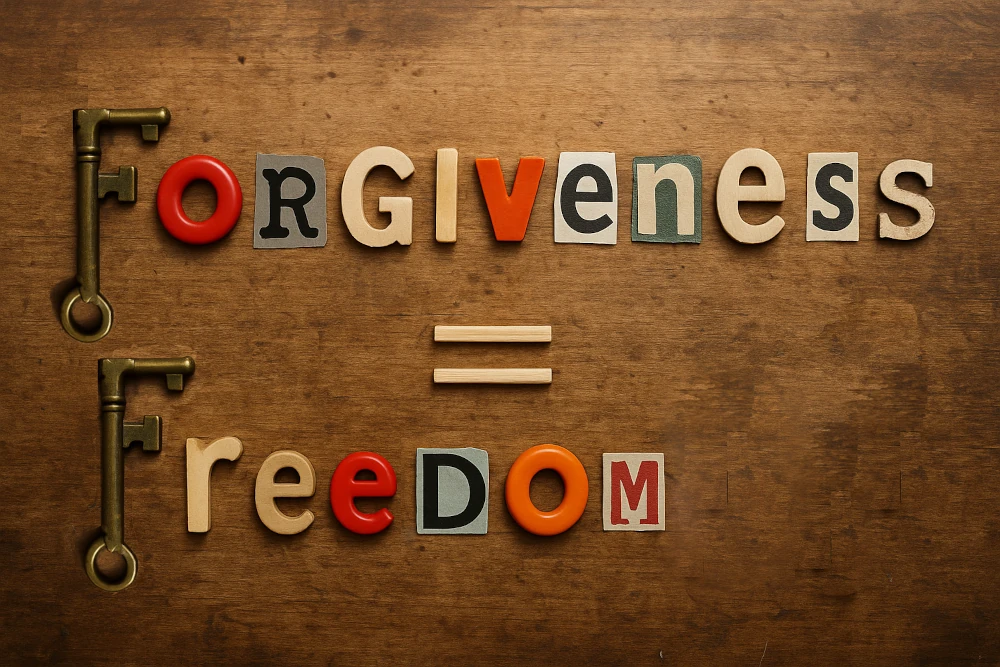
Forgiveness isn’t about becoming tolerant of unacceptable behavior. It’s about accepting that people are human, establishing strong boundaries with toxic behavior, and refusing to let resentment steer your life. When we remove blame and choose responsibility, we don’t erase the past — we release its grip and open ourselves to healing. The journey of forgiveness can be transformative, helping us reclaim our narrative and find joy beyond pain.
You deserve inner peace. Forgiveness is how you make room for it. Embracing the journey with compassion for yourself and others leads to a fuller, richer life.