
Anger management therapy in Tampa approaches anger differently than most people expect — not as the problem itself, but as a signal pointing to something underneath. When a man gets referred to anger management, the assumption is that his problem is a short fuse — that he needs better coping strategies, a timeout protocol, and maybe some breathing exercises. Sometimes that’s true. More often, it’s not.
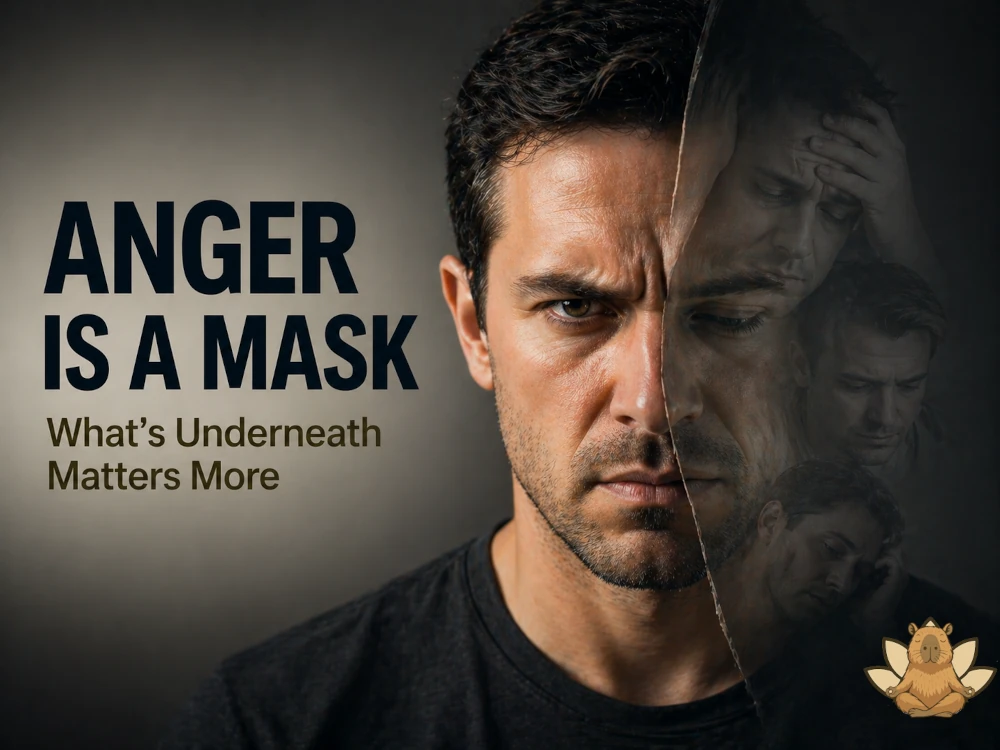
Anger management therapy in Tampa works best when it addresses what anger is actually doing — not just what it looks like from the outside. And what it’s usually doing, particularly for men, is covering something else. Something that never had another outlet.
Anger is the most socially tolerated emotion for men. Sadness isn’t. Fear isn’t. Shame is off the table entirely. Grief is acceptable in narrow doses, under controlled circumstances. But anger? Anger fits the script. Anger looks like strength.
So the nervous system learns: when pain exceeds tolerance, output it as anger. The original feeling — hurt, fear, grief, humiliation, powerlessness — gets converted into the one form of emotional expression that doesn’t carry a social cost for men. And then, eventually, it becomes the only form that’s available.
What’s Actually Underneath Men’s Anger and Anger Management Therapy
Fear and Powerlessness
Control is central to many men’s emotional lives. The sense that circumstances, relationships, or outcomes are outside their control produces a specific and intense distress. Anger is the behavioral response — it creates a temporary sense of agency, of pushing back against the powerlessness.
This is particularly visible in men who become most dysregulated when they feel they’re “losing” an argument, when plans fall apart, or when they sense that someone they love is pulling away. The anger is not about the argument or the plan. It’s about the fear underneath.
Grief and Loss
Men are less likely to grieve openly, and the grief doesn’t disappear because it isn’t expressed — it converts. A man who lost a parent, a relationship, a career, or a version of himself that mattered and never had space to mourn that loss may carry it as chronic low-grade irritability or episodic explosiveness.
The anger is the only available container for grief that has nowhere else to go.
Shame
Shame and anger have a direct neurological relationship. Shame is the experience of being fundamentally defective — not having done something wrong, but being something wrong. The nervous system experiences shame as a threat to existence, and the response can be rapid escalation into rage.
Men with significant shame histories — from critical or punishing parents, from trauma, from failure experiences that felt defining — often have low shame thresholds and fast shame-to-anger conversion. The anger is a defensive response to an unbearable internal experience.
Depression
Depression in men frequently presents as irritability rather than sadness. The classic depressed man who can’t get out of bed is real — but so is the one who is snapping at his family, driving too fast, picking unnecessary fights, and feeling a pervasive, sourceless hostility. If the anger has a global quality — if it attaches to anything and everything without needing a specific trigger — depression is often driving it.
Unprocessed Trauma
The hyperarousal state of trauma — the nervous system stuck in threat mode — produces exactly the reactivity that looks like an anger problem. A combat veteran who startles easily and snaps at minor provocations. A man with a history of physical or emotional abuse who reads neutral situations as threatening. The anger is the nervous system’s threat response misfiring in a context that doesn’t require it.
Why Anger Management Alone Often Falls Short and Anger Management Therapy
Standard anger management approaches focus on the surface: recognize escalation signals, use a timeout, apply a breathing technique, choose a different response. These skills are real and useful. But if the underlying fuel — the grief, shame, trauma, or depression — isn’t addressed, the pressure builds behind the new coping strategies. anger management therapy responds well to the right kind of clinical support.
Many men report completing anger management programs and feeling, for a while, more controlled — but still fundamentally the same inside. The rage doesn’t go anywhere; it just gets managed. And management is exhausting. And eventually it fails. anger management therapy doesn’t have to be permanent.
Effective therapy for men’s anger goes underneath the behavior to the source. That requires a different kind of work.
What Effective Men’s Anger Therapy Looks Like and Anger Management Therapy
Identifying the real emotion. The first clinical task is identifying what’s underneath the anger — not as a confrontational exercise, but as a collaborative investigation. What was happening just before? What was the feared outcome? What old experience does this feel like? If you’re exploring help for anger management therapy, a free consultation is a good place to start.
EMDR for traumatic roots. When anger has its roots in unprocessed trauma or shame — the kind that precedes conscious thought and fires before any rational intervention is possible — EMDR can address those stored experiences directly. Trauma that’s been processed loses its emotional charge. The trigger stops activating the threat response. The anger frequency and intensity decrease, not because the man is trying harder to control it, but because the fuel is gone. Working with a therapist who understands anger management therapy makes a concrete difference.
Depression and grief work. When anger is a mask for depression or unprocessed grief, treating those underlying conditions is the most direct path. Behavioral Activation, EMDR, and grief-focused therapy all address this. As the depression lifts and the grief has somewhere to go, the irritability and explosive quality of anger typically diminish. anger management therapy remains one of the most effective conditions to work with in therapy.
Shame work. Shame is the hardest to address directly because naming it activates it. Good therapy creates the conditions under which shame can be seen clearly enough to examine — and then begin to lose its grip. The core self-belief (“I’m defective, I’m worthless, I’m not enough”) that drives shame-to-anger conversion is exactly the territory EMDR is designed for. anger management therapy remains one of the most effective conditions to work with in therapy.
Anger Therapy for Men in Carrollwood, Tampa
If you’ve been told you have an anger problem — or if you’ve noticed that your reactions are bigger than the situations justify, that the people around you are walking on eggshells, or that you’re exhausted by a level of reactivity you can’t control — there’s likely something underneath worth looking at. Understanding anger management therapy is often the first step toward feeling genuinely different.
This is not about being weak or broken. It’s about understanding what the anger is actually telling you — and addressing that, rather than just the behavior. anger management therapy is something therapy can directly address.
Now & Zen Wellness in Carrollwood, Tampa offers individual therapy for men dealing with anger, irritability, and the emotional patterns underneath. In-person and telehealth sessions available. A free 15-minute consultation is the first step. anger management therapy is far more common than most people realise.
FAQ
Q: Is anger management the same as therapy for anger?
A: No. Anger management typically focuses on behavioral strategies — recognizing triggers, using timeouts, applying coping techniques. Therapy for anger goes deeper, addressing the emotional, neurological, and historical sources of the anger. Both have a role, but therapy addresses the underlying cause rather than just the behavior. anger management therapy responds well to the right kind of clinical support.
Q: Can depression cause anger in men?
A: Yes. Depression in men frequently presents as irritability rather than sadness. Chronic low-grade hostility, increased reactivity, and episodic explosive anger are common presentations of male depression. If the anger feels global — attaching to everything — depression should be assessed. anger management therapy doesn’t have to be permanent.
Q: Can EMDR help with anger issues?
A: Yes, particularly when the anger has roots in past trauma, shame, or unresolved experiences. EMDR processes the stored material that triggers disproportionate anger responses, reducing the neurological charge that drives the reactivity. Many men notice a significant decrease in anger intensity after EMDR work. If you’re exploring help for anger management therapy, a free consultation is a good place to start.
Q: Is it normal for men to express sadness as anger?
A: It’s extremely common. Emotional socialization for men typically allows anger while suppressing sadness, fear, and grief. Over time, those suppressed emotions convert into anger because it’s the available outlet. Therapy can help reverse this — opening access to the full emotional range. Working with a therapist who understands anger management therapy makes a concrete difference.
Q: How long does therapy for men’s anger take?
A: It depends on the source. Anger primarily driven by skill deficits may improve in 8–12 sessions. Anger rooted in trauma, depression, or deep shame patterns typically takes longer but produces more fundamental change. Most men notice meaningful shifts within the first several months. anger management therapy remains one of the most effective conditions to work with in therapy.

For more information, see the American Psychological Association on anger and emotional regulation.