
Table of Contents
Self-care in addiction recovery is not a luxury — it is a clinical necessity. For years, the phrase got dismissed as a pampering buzzword, something people reached for when they wanted an excuse to splurge. But anyone who has worked in or lived through recovery knows the truth: the basics of self-care — sleep, movement, connection, stillness — are what keep the recovery engine running. Neglecting them is not a minor oversight. It is a warning sign. This post covers five grounded, clinically informed self-care strategies that directly support addiction recovery, prevent relapse, and help you show up more fully in your own life.
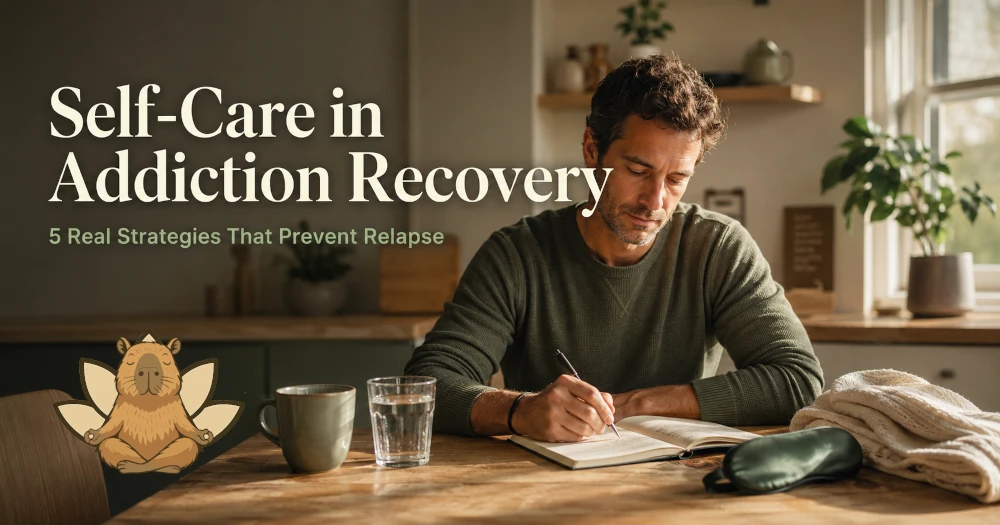
What Self-Care Really Means in Addiction Recovery and Self-Care In Addiction Recovery
Self-care in addiction recovery goes far deeper than spa days or guilty pleasures. In a recovery context, self-care means taking deliberate, consistent action to maintain your mental, physical, emotional, and spiritual health — not because you earned it, but because you need it to stay well.
Think of it like maintenance on a car. You don’t wait until the engine seizes to change the oil. You do it regularly, before a problem develops, because the car won’t run without it. Recovery works the same way. The daily, unglamorous acts of self-care — getting enough sleep, eating regularly, moving your body, checking in with your support network — are the oil changes that keep everything functioning.
For people in recovery from substance use disorders, this isn’t optional. Research from SAMHSA’s recovery support resources consistently shows that wellness practices — physical health, purpose, community, and stability — are foundational pillars of lasting recovery.
The Oxygen Mask You Keep Ignoring

The flight attendant instruction — put on your own oxygen mask before assisting others — is a cliché because it works. You cannot help anyone if you are unconscious. In recovery, this principle becomes urgent. Many people in active addiction spent years placing everyone else’s needs ahead of their own, using self-sacrifice to rationalize their use. Early recovery often reverses this too sharply — hyper-vigilance, over-service, a refusal to ask for help.
Sustainable recovery requires balance. It requires you to take your own oxygen first — not from selfishness, but from the clear-eyed understanding that your continued recovery is the most generous thing you can offer the people who love you.
If you are in Tampa or the Carrollwood area and want support building a balanced recovery life, the addiction recovery therapy services at Now & Zen Wellness are designed to address exactly this.
5 Self-Care in Addiction Recovery Strategies That Actually Work
1. Protect Your Sleep Like It Is a Prescription
Sleep deprivation is one of the most under-discussed relapse triggers. When you are exhausted, your prefrontal cortex — the part of the brain responsible for decision-making and impulse control — functions poorly. Cravings feel more intense. Emotional regulation becomes harder. The neural pathways associated with substance use become louder.
Protecting sleep means building a consistent schedule, reducing screen time before bed, and treating sleep disruption as a clinical issue rather than a minor inconvenience. If you are struggling with sleep in recovery, speak with your therapist or physician. This is a real concern, not something to push through alone. Understanding self-care in addiction recovery is often the first step toward feeling genuinely different.
2. Move Your Body Every Day — Even Briefly
Physical movement is one of the few interventions shown to directly impact dopamine regulation. For people recovering from substance use, whose dopamine systems have been dysregulated, regular exercise is not just good for fitness — it is neurologically restorative. self-care in addiction recovery is something therapy can directly address.
You do not need a gym membership or a structured workout. A 20-minute walk, stretching in your living room, or swimming laps at a community pool all count. The key is consistency. Movement signals to your nervous system that the body is safe, capable, and worth caring for. self-care in addiction recovery is far more common than most people realise.
3. Build and Maintain Your Support Network
Isolation is a relapse risk. Connection is protection. Recovery does not happen in private — it happens in relationship with people who understand the stakes and can offer accountability, warmth, and honesty. self-care in addiction recovery responds well to the right kind of clinical support.
This means attending your support group, returning your sponsor’s calls, and showing up for the people who show up for you. It also means being honest when you are struggling, rather than waiting until the situation is critical. If you are working through relationship patterns that affect your recovery, relationship therapy at Now & Zen can help you build healthier connections. self-care in addiction recovery doesn’t have to be permanent.
4. Create a Daily Reflective Practice
Reflective practice in recovery is not necessarily religious — though for many people faith is central. It is about setting aside intentional time each day to connect with something larger than your immediate circumstances. This might be prayer, meditation, journaling, reading, time in nature, or any practice that creates stillness and perspective. If you’re exploring help for self-care in addiction recovery, a free consultation is a good place to start.
People in 12-step programs often call this a daily reprieve. The phrase is accurate: you do not earn lasting peace from yesterday’s work. You practice for it every day. Many clients at Now & Zen incorporate mindfulness-based approaches from individual therapy to support this kind of daily intentional practice. Working with a therapist who understands self-care in addiction recovery makes a concrete difference.
5. Do a Daily Self-Care Inventory
At the end of each day, take five minutes to check in with yourself. Ask: Did I eat today? Did I sleep last night? Did I connect with someone I trust? Did I do something that brought me joy? Did I notice anything that felt like an early warning sign? self-care in addiction recovery remains one of the most effective conditions to work with in therapy.
This inventory does not need to be formal. It can be written in a journal, spoken aloud, or simply held in mind. The goal is to build the habit of self-awareness — catching warning signs early, before they become crises. self-care in addiction recovery doesn’t have to be permanent.
Building a Recovery Check-In Routine
A recovery check-in is not therapy homework — it is a survival skill. Think of it as the daily inventory that keeps you grounded in what is real. Many people in long-term recovery describe it as one of the most important habits they developed: the discipline to pause, look inward honestly, and respond to what they find. If you’re exploring help for self-care in addiction recovery, a free consultation is a good place to start.
The questions do not need to be complicated. Start with the basics:
- How am I sleeping?
- How am I eating?
- Am I isolating or connecting?
- Did I notice any craving or urge today? What triggered it?
- What do I need right now that I have not asked for?
Over time, you will learn to recognize your personal patterns — the warning signs unique to you. That self-knowledge is one of the most valuable things you can develop in recovery. When you work alongside an EMDR or trauma-informed therapist, this kind of body awareness becomes even more precise. Working with a therapist who understands self-care in addiction recovery makes a concrete difference.
Self-Care as Relapse Prevention: What Therapists Know
In formal relapse prevention planning, self-care is not a nice-to-have — it is a clinical component. A structured relapse prevention plan identifies triggers, warning signs, and coping strategies. Self-care behaviors appear in nearly every evidence-based plan because they address vulnerability directly. self-care in addiction recovery remains one of the most effective conditions to work with in therapy.
Warning signs often show up in the body and in behavior before they reach conscious thought. Not showering. Skipping meals. Canceling plans with supportive friends. Staying up too late. These behaviors don’t announce themselves as early relapse warning signals — they look like ordinary bad days. But a person with a practiced self-care routine notices them faster and responds sooner. Understanding self-care in addiction recovery is often the first step toward feeling genuinely different.
If you are building or rebuilding a relapse prevention plan, working with a therapist who specializes in addiction can make a significant difference. At Now & Zen Wellness in Tampa, addiction therapy integrates evidence-based relapse prevention with personalized care that supports long-term recovery. If you are ready to take that step, reach out to schedule a consultation. self-care in addiction recovery is something therapy can directly address.
Frequently Asked Questions About Self-Care in Addiction Recovery
Is self-care really important in addiction recovery, or is it secondary to treatment?
Self-care is inseparable from treatment, not secondary to it. Foundational wellness habits — sleep, movement, nutrition, connection — directly affect brain chemistry, emotional regulation, and relapse risk. Evidence-based recovery programs integrate self-care as a core component, not an afterthought. self-care in addiction recovery is far more common than most people realise.
What counts as self-care in recovery — does it have to be elaborate?
No. The most effective self-care in recovery is simple and consistent: sleeping on a regular schedule, eating real meals, moving your body daily, calling a support person, and taking five minutes to check in with yourself. Elaborate rituals are not required and can actually create pressure that backfires. self-care in addiction recovery responds well to the right kind of clinical support.
How does self-care prevent relapse specifically?
Self-care reduces the vulnerability that makes relapse more likely. When you are exhausted, isolated, or physically depleted, your brain’s impulse control weakens and cravings feel more overwhelming. Consistent self-care keeps your nervous system regulated and your support systems engaged — both of which protect against relapse. self-care in addiction recovery doesn’t have to be permanent.
What should I do if I notice I have been neglecting self-care in my recovery?
Treat it as an early warning sign, not a failure. Return to the basics: sleep, eat, connect, move, reflect. If you notice a pattern of neglect or feel like you are heading toward relapse, contact your therapist or sponsor immediately. Early intervention is far easier than crisis response. If you’re exploring help for self-care in addiction recovery, a free consultation is a good place to start.
Can therapy help me build better self-care habits in recovery?
Yes. Therapy — especially addiction-informed therapy — can help you identify your personal warning signs, build sustainable routines, and address the underlying patterns that make self-care feel difficult. If you are in the Tampa area, Now & Zen Wellness offers addiction recovery therapy that addresses the whole person, not just the substance use. Working with a therapist who understands self-care in addiction recovery makes a concrete difference.

self-care in addiction recovery remains one of the most effective conditions to work with in therapy.