

Most couples don’t seek couples therapy until they’ve been struggling for years. According to research from The Gottman Institute, the average couple waits six years after serious problems start before getting professional help. Six years. By that point, resentment has piled up, communication has broken down, and the distance between two people can feel enormous.
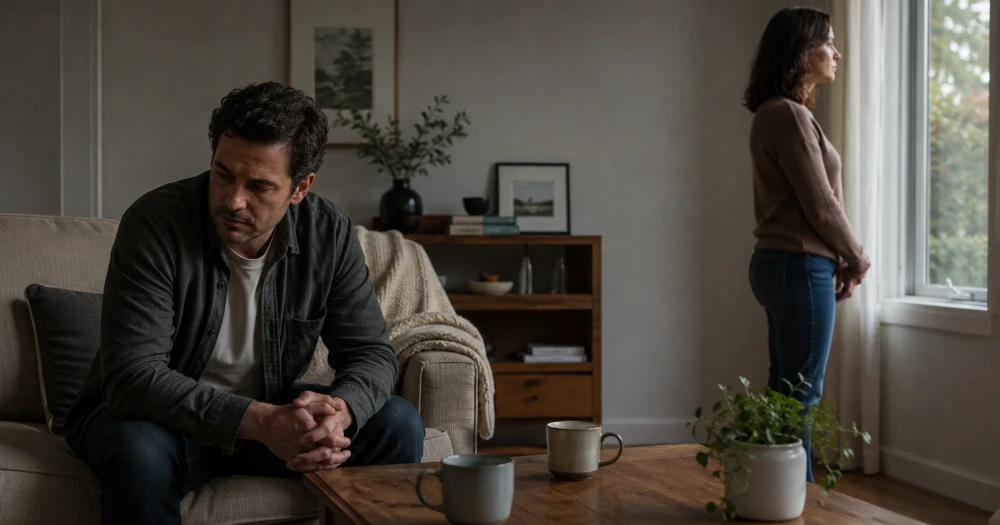
But here’s what I’ve seen working with couples in Tampa: therapy works best before a relationship hits rock bottom. You don’t have to be in crisis to benefit from couples therapy. You just have to notice something isn’t working — and decide to do something about it.
8 Signs Your Relationship Could Benefit from Couples Therapy and The Same Argument Keeps Happening
You bring it up. It escalates. Nothing gets resolved. Two weeks later, same conversation. This isn’t a sign you’re incompatible — it’s a sign that whatever is driving the conflict hasn’t been identified yet. Recurring arguments without resolution are one of the clearest indicators that couples therapy would help.
Surface conflicts are almost never the actual problem. What’s underneath them usually is. A therapist who understands relationship patterns can help you both figure out what you’re really arguing about, and why the same conversation keeps ending the same way.
2. You Feel More Like Roommates Than Partners
You share a house, split bills, maybe raise kids together — but the emotional connection has gone quiet. You don’t fight much. You just don’t really talk either. You’ve stopped asking each other real questions. This kind of slow emotional distance is one of the most common things I see in long-term relationships.

It’s uncomfortable to name partly because there’s no obvious crisis to point to. Couples therapy helps you identify when the distance started and what it would take to close it.
3. Communication Has Become Painful or Impossible
There are topics you’ve stopped bringing up because you know how they’ll end. Or every conversation, no matter where it starts, ends up in the same place. Communication breakdown looks different in different couples — some shut down completely, others escalate fast — but the outcome is the same: important things go unsaid, and both people feel unheard.
Couples therapy uses evidence-based approaches like Emotionally Focused Therapy and the Gottman Method to change these patterns. The goal isn’t to “fight better.” It’s to understand why the communication breaks down in the first place.
4. There’s Been a Betrayal of Trust
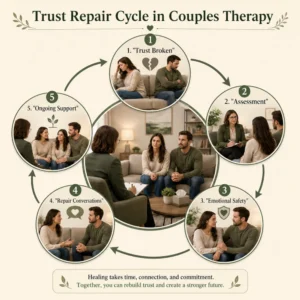
Infidelity gets the most attention, but betrayal takes many forms: financial deception, emotional affairs, repeated broken promises, significant secrets kept over time. Rebuilding trust after any of these is possible — but it’s rarely something couples can do on their own without some structure around it. According to the American Psychological Association, couples therapy can be effective even after serious trust violations.
Both partners need to be willing to engage the process honestly, and the work is real — but so is the possibility of coming out the other side.
5. A Major Life Change Has Put Pressure on Things
New baby. Job loss. Illness. A move. Losing a parent. Life transitions — even good ones — require couples to renegotiate roles, routines, and expectations. When that doesn’t happen consciously, distance fills the gap. I’ve worked with couples who came in not because they were fighting constantly, but because a major change had left them feeling like strangers to each other. Couples therapy during a transition isn’t crisis management. It’s staying connected while life shifts around you.
6. Physical Intimacy Has Significantly Decreased
Changes in physical closeness are almost always connected to something happening emotionally between two people. Unresolved conflict, accumulated resentment, stress, fear of rejection — these affect how available each person feels to the other. If you’ve tried to talk about it and the conversation either doesn’t happen or doesn’t go anywhere productive, that’s a sign the issue runs deeper than either of you can reach alone.
7. You’re Thinking About Separation or Divorce
If you’re already here, couples therapy can help you make that decision with more clarity. For some couples, therapy is about repair. For others, it’s about reaching a thoughtful decision about separation — one made with intention rather than in the middle of an emotional crisis. Neither outcome is predetermined when you walk in the door.
What changes is that you arrive at whatever decision you make with better information, a clearer understanding of what broke down, and more agency over what comes next.
8. One or Both of You Is Struggling Individually
Depression, anxiety, grief, trauma, addiction — these don’t stay contained to one person. They affect the relationship in real ways: more conflict, less emotional availability, one partner carrying more than their share. Sometimes individual therapy is the right starting point. I work with people dealing with anxiety and depression individually, and we sometimes identify together that adding couples therapy would address both dimensions more effectively. If your partner is struggling and it’s affecting your relationship, that’s a conversation worth having.
Can Couples Therapy Help If Only One Person Is Willing? and If one partner refuses to come in, individual therapy can still shift things. Changing your own patterns — how you communicate, how you react when you feel disconnected, what you do when conflict starts — can change the dynamic of a relationship even without your partner in the room.
That said, couples therapy is significantly more effective when both people participate. If your partner is hesitant, one introductory session is often enough to show them it’s not about blame or sides. It’s about the relationship itself.
There’s No Such Thing as Starting Too Early
The most common thing I hear from couples who’ve been coming in for a while is some version of “we should have done this years ago.” Couples therapy is not a last resort. It works much better when there’s still goodwill between you — still warmth, still the sense that something worth preserving is there.
If you’re reading this and recognizing your relationship in any of these signs, that recognition matters. Couples therapy in Tampa and across Florida via telehealth is available through my practice at Now and Zen Wellness.
If you’re ready to take a step, I’d encourage you to reach out. I work with couples in Tampa and throughout Florida via telehealth. Sessions are 50 minutes, and most couples start noticing real change within 8–12 sessions — though every relationship moves at its own pace.
The first step is a free 15-minute call where you can ask questions and see whether working together makes sense. Schedule that call here. Couples therapy works best when you start while there’s still something to work with. If you’re reading this, there probably is.
Ready to get support? schedule a free consultation at Now & Zen Wellness in Tampa.
Ready to get support? individual therapy at Now & Zen Wellness in Tampa.