
Letting go of resentment is one of the harder things I ask people to work toward in therapy. Not because they don’t want to — most people genuinely do want to feel better. But resentment has a function. It keeps score. It tells you that staying angry proves you’re taking the harm seriously, that you haven’t let anyone off too easy. Walking away from that scoreboard feels like surrender. What I’ve watched, again and again in the therapy room, is that the scoreboard isn’t protecting you. It’s running you.
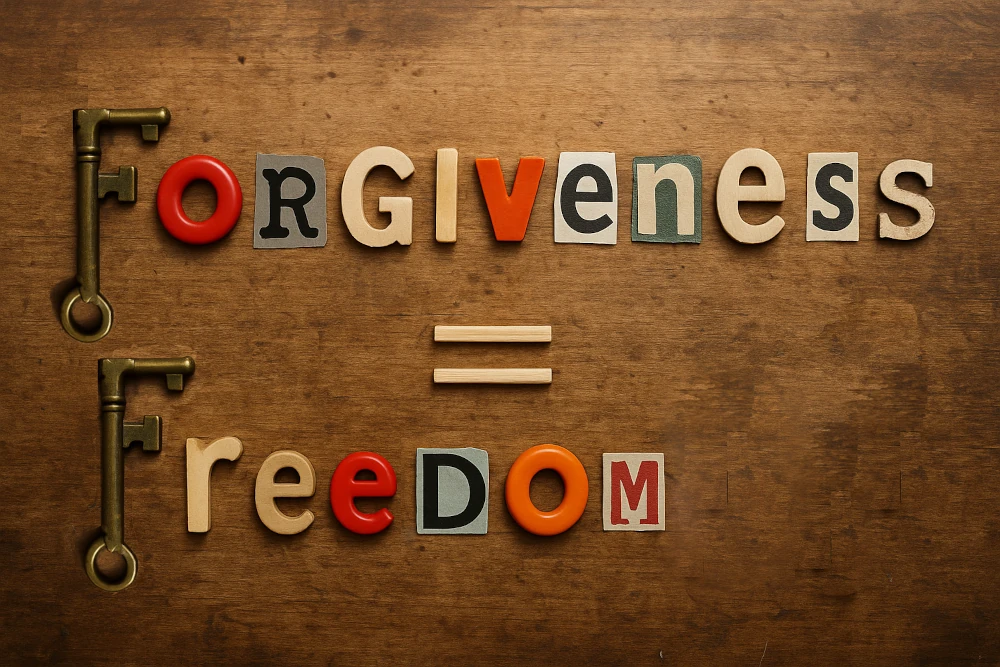
Why Letting Go of Resentment Feels So Hard
When a betrayal happens — an affair, a broken promise, sustained emotional neglect — the mind responds the way it responds to any threat. You become hypervigilant. You replay what happened. You scan for signs it might happen again. This isn’t weakness. Your nervous system is doing exactly what it was built to do.
The problem is that the threat response doesn’t switch off on its own once the immediate danger has passed. Resentment becomes the mind’s way of staying on guard. Letting go of resentment can feel dangerous because, to the part of your brain wired for survival, dropping that vigilance is a genuine risk.
There’s also the fairness problem. If the other person isn’t suffering the way you are, releasing resentment can feel like they got away with something. I hear this often: “Why should I be the one to do this work when they haven’t even apologized?” That’s a real question, not a deflection. The answer isn’t about fairness. It’s about who ends up living inside the pain day after day. That fairness instinct is one reason letting go of resentment takes active, repeated effort — not a single decision.
In the Therapy Room and Letting Go Of Resentment
As a couples therapist in Tampa, much of my work involves partners who have lived through a betrayal. One person cheated. One person spent years managing a partner’s volatility. One person slowly checked out of the relationship without ever saying so. In all of these situations, I watch the same pattern develop: the hurt partner holds resentment like a stone, and the weight of it seeps into everything — sleep, parenting, how much energy they have left for anything that matters.
Some partners begin overanalyzing a partner’s behavior around every interaction, looking for confirmation that the harm will happen again. This is not a character flaw. This is what unprocessed pain does when it has nowhere to go. The goal isn’t to talk someone out of their anger or rush them past it.
It’s to help them understand what the resentment is doing for them — and what it’s costing — so they can make a real choice about whether to keep carrying it. That process is also closely tied to how people navigate therapy progress over time, and why real change often looks quieter than people expect.
What Resentment Is Actually Costing You
Dr. Wayne Dyer taught that “there are no justified resentments.” I’ve returned to that idea more times than I can count, because it keeps turning out to be true in practice — not as a moral statement, but as a clinical observation. The person carrying a resentment pays in sleep, in mental bandwidth, in their ability to be present with the people they love.
The person they resent is often living their life without giving the grudge a second thought. There’s a Chinese proverb: “If you seek revenge, dig two graves.” A teaching attributed to the Buddha asks: if someone offers you a gift and you don’t accept it, to whom does it belong?
 The person who wronged you is, in a sense, offering something corrosive every time that memory surfaces. Letting go of resentment is how you choose not to accept it. When it comes to your own recovery, it’s how you take back the energy the grudge has been spending. The research supports this.
According to the Mayo Clinic, forgiveness is linked to lower anxiety, reduced depression, stronger immune function, and improved heart health. That’s not a soft outcome — it’s a measurable physiological difference. And according to Psychology Today‘s summary of the forgiveness literature, people who practice forgiveness consistently report higher life satisfaction and fewer depressive symptoms over time — independent of whether the other party apologized or changed.
What Forgiveness Actually Means
Forgiveness is not approval. It doesn’t mean what happened was acceptable, or that you’re obligated to stay in a relationship with the person who hurt you. It doesn’t mean skipping accountability, pretending the trust was never broken, or rushing yourself into readiness before you’re there. It means choosing to release the hold resentment has on your life — not for the other person’s benefit, but for yours.
It means taking responsibility for your side of the process, which includes setting boundaries that protect you going forward. It means something like goodwill — not warmth, not forced closeness, but a willingness to stop rehearsing the injury on a loop. Letting go of resentment is a decision made for yourself, not a gift handed to someone else.
Your nervous system will remember what happened. That’s not a failure of forgiveness. That’s how humans are built, and it’s part of what keeps you safe in the future. The goal isn’t amnesia. The goal, when it comes to letting go of resentment, is to stop letting a past injury steer present decisions.
6 Steps for Letting Go of Resentment and Moving Forward
1. Name the Wound Precisely
Not in a vague way. Say what happened, when it happened, and what it cost you. “I felt betrayed when you slept with someone else while we were together, and it made me doubt everything I thought we had.” Specific pain can be addressed. Vague pain just circulates. letting go of resentment doesn’t have to be permanent.
2. Regulate First, Then Engage
This isn’t about suppressing emotion. It’s about bringing your body out of a threat state before having the conversation. Breath work, movement, a walk around the block — whatever gets you grounded. You can’t process what happened while your nervous system is still in crisis mode. If you’re exploring help for letting go of resentment, a free consultation is a good place to start.
3. Separate Blame from Responsibility
Blame keeps your focus on them: what they did, whether they’ve suffered enough, whether they deserve your forgiveness. Responsibility asks a different question: what do I need in order to reclaim my peace? That shift is where letting go of resentment actually begins. Blame keeps you stuck at the moment of injury. Responsibility moves you forward from it.
4. Set Real Boundaries
Forgiveness and reconciliation are not the same thing. You can forgive someone and still require specific changes in how they treat you. Define what needs to be different, and what happens if it doesn’t change. Vague boundaries don’t protect anyone. Working with a therapist who understands letting go of resentment makes a concrete difference.
5. Track Actions, Not Promises
Repair is measured in consistent behavior over time, not in apologies or declarations. When someone says they’ve changed, what you’re watching for is whether the behavior actually reflects that — and whether it holds for months, not days. I explore this in depth with couples through couples therapy, where the structure of sessions creates accountability that’s hard to maintain without a neutral space. letting go of resentment remains one of the most effective conditions to work with in therapy.
6. Redirect Intrusive Thoughts
When your mind replays the harm — and it will — try redirecting rather than suppressing. Some clients use a simple statement: “I’ve already decided to let this go. I don’t need to relitigate it.” Others use a compassion phrase: “May I be at peace. May they be well. May we both be free from this.” This practice isn’t about pretending nothing happened.
It’s about choosing where to put your energy each time the thought comes back. If you’re carrying a wound from a past relationship that’s still shaping how you show up today, individual therapy can offer a space to do this work at a pace that fits where you actually are. letting go of resentment remains one of the most effective conditions to work with in therapy.

Freedom on the Other Side
Letting go of resentment doesn’t mean becoming tolerant of harm. It doesn’t mean the relationship repairs automatically. What it means is that you stop giving a past injury full-time residency in your present life. When I work with someone who has moved through this, the shift is quiet. They stop bringing up the incident in every argument.
They stop measuring everything through the lens of the betrayal. They have bandwidth again — for the things they care about, for the people they love, for themselves. That’s the freedom on the other side: not a dramatic moment of release, but a slow return of space. If you’re somewhere in the middle of that process — not through it, not ready to be through it, just trying to understand why letting go of resentment feels like such an impossible ask — that’s exactly where I work with people. Reach out when you’re ready. New clients welcome.