
Alcohol and substance use create real changes in your body and brain — your central nervous system, your liver, your sleep, your cognition. Your body does start to repair once you stop. But early addiction recovery means going through the adjustment before the healing arrives, and the adjustment is what catches most people completely off guard. Here are some common phases during the first 30 days of sobriety.

Days 1–7 of the First 30 Days of Sobriety: The Survival Phase
In the first 30 days of sobriety, week one is just about getting through it.
Depending on what you’re quitting, physical withdrawal can hit hard. For alcohol or benzodiazepines especially, detox can be dangerous — get medical supervision. Don’t ride it out at home alone.
Even if the physical part is manageable, the emotional piece often isn’t. This is normal in the first 30 days of sobriety: irritable for no clear reason, sleep that won’t come, nothing feels right, food tastes off.
This happens because your brain has been getting dopamine from your substance and suddenly isn’t. Everything else feels flat. Don’t expect to feel good. The bar right now is getting through the day. Drink water. Eat something. Call someone who’s actually been through it. This part doesn’t last.
Days 8–14: When your brain gets sneaky
Around week two of the first 30 days of sobriety, the worst physical symptoms might ease. That’s when the mental games start.
“Maybe I wasn’t that bad.”
“I could probably handle just one.”
That voice is your addiction talking, not your judgment. Your brain wants what it remembers, regardless of what that cost you. It’s one of the harder things about the first 30 days of sobriety — the rational brain knows better, but the craving brain doesn’t care.
Write down why you quit. Keep a list of all the ways your use was affecting your life. When the bargaining thoughts show up, read it. Call someone who’s been where you are. Go to a meeting, especially if you’re convincing yourself you don’t need to.
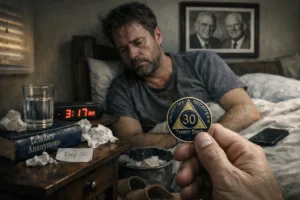
Days 15–21: Time suddenly belongs to you
When you remove the thing consuming your time and mental energy, you suddenly have hours of it. And no idea what to do with them.
Your evenings used to have a structure, even if it was a bad one. Now they’re just open, and the openness is uncomfortable. It’s possible the addiction was your hobby — and that a lot of your socializing revolved around it. Strip it away and you find out pretty fast which friendships were built around something else.
This stage can feel lonely. It’s also where early addiction recovery starts to feel like more than just white-knuckling through each day.
Try things, even if they feel stupid at first. Walk. Something you dropped years ago. Join something. The goal isn’t to fill every hour — it’s to start building a life that doesn’t orbit the addiction.
Days 22–30: Feeling what you’ve been avoiding
In the first 30 days of sobriety, you find out what addiction was actually covering. It’s rarely just about the substance — it’s about what you were using it to escape.
Anxiety. Depression. Trauma. Loneliness. Whatever you were numbing — it’s still there. Around week three or four, a lot of people hit an emotional wall. More anxious than when they were using. Crying at things they can’t explain. Heavy in a way that doesn’t have a clear cause. Some people describe feeling worse than during active use, which is disorienting and, honestly, unfair.
Your brain and body are processing what’s been sitting there. A therapist trained in EMDR or trauma work can help you get at what was underneath the using. This isn’t the part to white-knuckle. It takes longer and it doesn’t work as well.
What Nobody Tells You About the First 30 Days of Sobriety
You might not feel proud yet. People around you are probably more celebratory than you feel. You’re likely just tired and trying to hold on. Pride usually comes later.
Your relationships might get worse before they get better. During the first 30 days of sobriety, people in your life are adjusting to you too. Some don’t know what to do with this version. Some friendships won’t survive recovery, and that’s not a sign you did something wrong.
You’ll probably try to replace one thing with another. Working out obsessively, eating ice cream every night, hours on your phone. Cross-addiction is common — your brain hasn’t stopped needing relief, it’s just looking somewhere new. Worth noticing.
Sleep will be off for a while — insomnia, vivid dreams, night sweats are common in the first 30 days of sobriety and beyond. It’s one of the last things to settle. But I haven’t worked with anyone whose sleep didn’t eventually come back.
Early addiction recovery isn’t linear. A decent morning can turn into a hard afternoon. That’s not failure.

Getting Help Through the First 30 Days of Sobriety
The first 30 days of sobriety are genuinely hard. They’re also the foundation of early addiction recovery — everything after depends on getting through this stretch.
Find people who actually understand what this is — who won’t look at you strangely for struggling. A therapist, a recovery group, a sponsor — something with other people in it. The SAMHSA National Helpline is free, confidential, and available 24/7 if you need a place to start. Most people who get through early addiction recovery didn’t do it alone — and the research is clear that social support is one of the strongest predictors of staying sober past 30 days.
If you’re looking for professional support with addiction recovery in Tampa, reach out to schedule a consultation.