
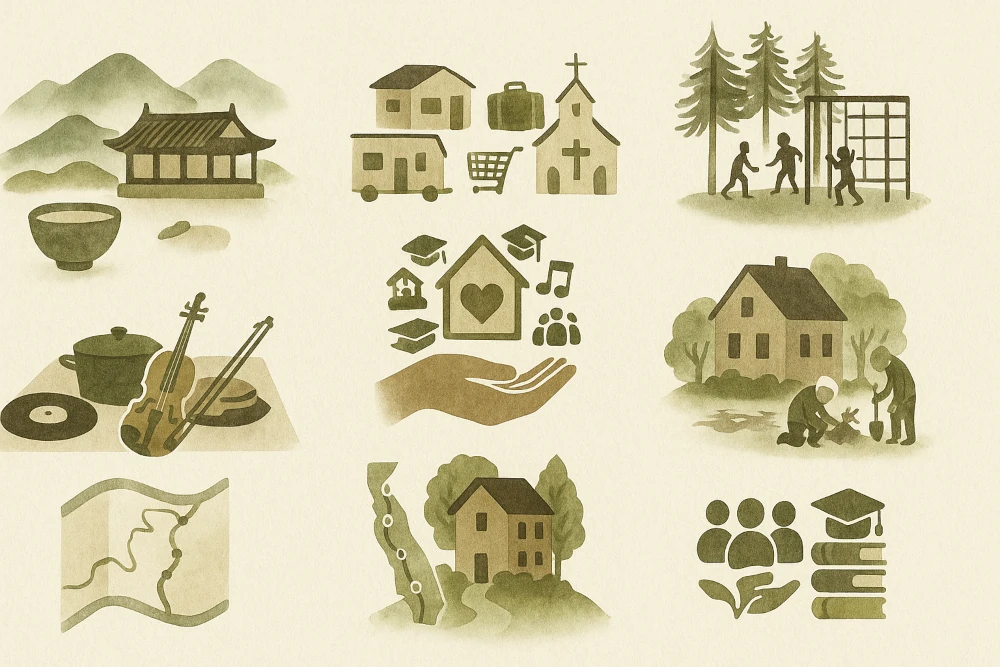
Cultural identity therapy is what happens when a therapist stops asking what’s wrong and starts asking where you come from. Not your diagnosis. Not your symptom list. Your food, your music, your people — the places that still live in you whether you want them to or not. Most clients don’t expect that question. A lot of them find it opens more than they thought it would.
I didn’t think much about “culture” until my Bachelor’s of Social Work program put the word front and center. One assignment required us to research a culture that wasn’t our own and interview people from that community. I chose South Korea — partly because my dad spent years there with the Army. That project changed how I saw things: culture isn’t just festivals and flags. It’s the daily stuff that shapes you, a lot of it without you noticing.
Exploring cultural identity therapy has been a pivotal experience for many, revealing deep connections to our roots.
The culture I didn’t know I had and Cultural Identity Therapy
Growing up, people called me an “Army brat.” At the time I didn’t read that as culture. School changed whenever new orders came in. We bought groceries at the commissary. Afternoons went to the AYA — shooting pool, pickup basketball. There were woods out back and a jungle gym we’d taken over, building clubhouses, making up rules as we needed them. According to Ruff and Keim, writing in The Professional Counselor, military children change schools six to nine times between kindergarten and high school graduation — three times more often than their civilian peers. If that was your childhood, the disruption wasn’t a disruption. It was just your normal.
Through cultural identity therapy, people can come to terms with the influences that have shaped their lives.
Music was another thread I didn’t think to name. My parents’ first CD was Doug and Rusty Kershaw. Cajun bluegrass, Louisiana fiddle music. I was into classic rock. Those fiddles got in anyway. My parents played The Monkees; I later claimed The Beatles; and somewhere in there I figured out you can inherit sounds you didn’t choose and still make them yours.
Ultimately, cultural identity therapy is about realizing that our stories are vital to our well-being.
Cultural identity therapy emphasizes the importance of understanding these diverse backgrounds and how they shape our interactions.
For a long time, not having a hometown felt like not having a culture. What I had instead was several — Army culture, Southern culture, and a kind of Eastern-American mix: Pennsylvania, Maine, New York, Georgia, Florida, Louisiana.
In cultural identity therapy, every story shared becomes a thread in the rich tapestry of cultural understanding.
Ultimately, cultural identity therapy fosters deeper connections not only with ourselves but also with our communities.
Learning to see culture — mine and yours
The mapping exercise in cultural identity therapy often opens new pathways for understanding oneself.
Many find that cultural identity therapy helps them discover aspects of their identity they never considered.
That South Korea assignment taught me to sit with people and listen for what’s underneath. Culture is less like a costume and more like the smell of a neighborhood at dinnertime. The way people say hello. The story someone leads with when they want you to really get them.
Cultural identity therapy addresses how our backgrounds influence our perspectives in significant ways.
Cultural identity therapy invites us to explore these questions fully, enriching our therapeutic journey.
When I was a registered intern doing intakes, one of the standard questions was: what’s your culture? A lot of people stared back like I’d asked something in another language. I understood. I started answering it for them: the food you grew up eating, what you reach for when you’re homesick.
The music that was already on before you had a preference, and what you landed on once you did. The places that still own a piece of you. Who taught you how to fight, make up, take a breath. Even the stuff you chose yourself — sneakerheads, metalheads, anime kids — each with their own codes. The NASW standards for cultural competence in social work frame this well: understanding a client’s cultural context isn’t optional — it’s the foundation.
Through cultural identity therapy, clients often learn to embrace their multifaceted backgrounds.
Usually that’s when people start talking and can’t quite find where to stop.
In cultural identity therapy, we recognize the complex layers of identity that shape our personal narratives.
How I help people name and claim their culture
Clients often express that cultural identity therapy helps them articulate their feelings and experiences more clearly.
In individual therapy I sometimes ask people to do a quick mapping exercise. What did breakfast look like when you were eight? What’s the recipe you’d call your grandmother to get right? Name five songs your family played, five you picked yourself, five that place you where you are now. Which homes, schools, churches, or jobs actually mattered — and what did each one leave you with?
Most people land somewhere like: I didn’t think I had one. Turns out I can barely fit it.
That’s usually when the real conversation starts. Respecting where other people come from is a lot easier once you’ve taken stock of where you come from. You stop needing other people’s backgrounds to look like yours. You start getting curious about how they got to be who they are. The APA’s multicultural guidelines for psychologists put it plainly: self-awareness about your own cultural background is a prerequisite for working effectively with anyone else’s.
Frequently asked questions about cultural identity therapy
What does cultural identity have to do with therapy?
More than most people expect. How you were raised — the food, the faith, the places, the people who shaped you — affects how you relate to others, how you handle conflict, and what you believe you deserve. Ignoring that in therapy means working with half the picture.
What if I don’t feel like I have a cultural identity?
That’s the most common answer I hear. It usually means nobody’s asked the right questions yet. Once we start mapping — food, music, places, the people who taught you how to be a person — most people find they have more culture than they can hold, not less.
What if my culture feels complicated or painful?
Then that’s exactly what’s worth looking at. Culture isn’t always warmth and nostalgia — sometimes it’s the thing you survived, or the identity that was handed to you without your consent. Therapy is a good place to sort out what you want to keep and what you’re ready to set down.
Do you work with clients on cultural identity in therapy sessions?
Yes. It comes up in almost every intake, and often becomes a thread we return to — especially with clients working through identity questions, relationship patterns, or trauma rooted in family dynamics. If you’d like to talk about starting, a free 15-minute consultation is a good place to begin.