
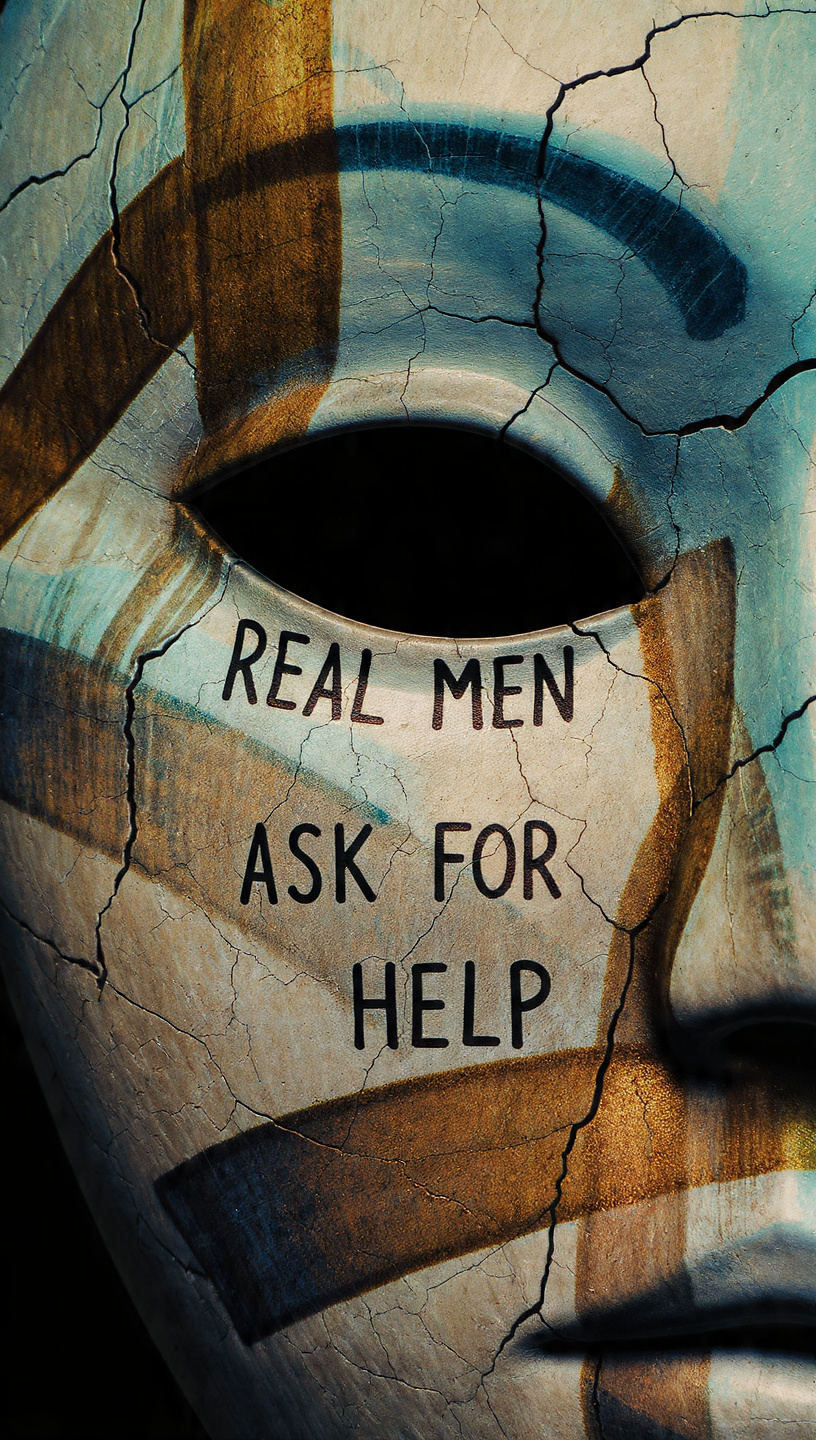
Spoiler alert: “Being a man” isn’t actually a superpower that prevents mental health struggles, mental illness, or painful emotions.
Here’s a fun fact that’s not actually fun at all: men are nearly four times more likely to die by suicide than women, yet they’re significantly less likely to seek mental health treatment or professional help. If that math doesn’t make sense to you, welcome to the paradox of men’s mental health.
It’s like knowing your check engine light is on, continuing to drive, and then being genuinely surprised when the car breaks down on the highway. Except instead of a car, it’s your brain, your relationships, and your health. And instead of AAA, what you actually need is therapy, early intervention, and support from qualified mental health providers.
For many men, the idea of reaching out to a mental health professional feels foreign. Men tend to push through, self medicate, or minimize their symptoms, even when their loved ones are clearly worried. That pattern is common in the psychology of men, but it’s also something we can change.
The Numbers Don’t Lie (Even If We Do)
Let’s start with some statistics that should make us collectively uncomfortable and highlight why suicide prevention and men’s health need more attention:
- 75% of suicides in the United States are men.
- Only 1 in 3 men who experience mental health issues will seek professional help or such services through counseling or psychiatry.
- Men are 32% less likely than women to have visited a mental health professional in the past year.
- Over 6 million men in the U.S. experience depression annually, yet male depression remains significantly underdiagnosed.
- 77% of men report experiencing common symptoms of mental health conditions like anxiety or depression.
- 40% of men say it would take thoughts of suicide or self-harm to make them seek help.
Research studies and meta analyses in clinical psychology, the American Psychologist, and other peer-reviewed American journals repeatedly show this gap between need and help seeking. Existing literature and qualitative systematic literature review articles raise the same research questions over and over: why do so many men experience serious symptoms but attempt suicide or reach out only when things are at a crisis point?
So basically, many of us will wait until the house is actively burning down before we even consider calling the fire department. And sometimes not even then.
Why Is This Happening?
(Besides Toxic Masculinity—Though Yeah, Mostly That)
The reasons men struggle with help seeking behavior are complex, deeply ingrained, and frustratingly predictable. They involve gender roles, masculine norms, psychosocial factors, and how we’ve been trained to think about health and emotions.
Let’s break down some of the main culprits.
1. The “Man Up” Industrial Complex
From childhood, many men receive a steady stream of messages that emotional expression equals weakness. “Boys don’t cry.” “Toughen up.” “Walk it off.” “Don’t be such a girl.” These phrases are so common they practically form the national anthem of traditional male role expectations.
Over time, those messages become internalized gender norms. In the language of clinical psychology, they create gender role conflict and hegemonic masculinity—the belief that a “real man” must always be strong, in control, and unemotional. In the psychology of men and masculinities, these beliefs are not just attitudes; they’re risk factors.
By adulthood, many men have learned that experiencing emotional distress—much less naming it—is fundamentally incompatible with masculinity. Asking for help feels like admitting failure, weakness, or inadequacy. It’s not surprising that men tend to hide their feelings, ignore warning signs, and downplay their own symptoms.
This cultural pressure is so strong that even researchers initially overlooked men’s emotional experiences. Brené Brown tells a story about this in one article and talk that shifted her entire research direction. She explained:
“I did not interview men for the first four years of my study. And it wasn’t until a man looked at me after a book signing, and said, ‘I love what you have to say about shame; I’m curious why you didn’t mention men.’ And I said, ‘I don’t study men.’ And he said, ‘That’s convenient.’”
She goes on to describe what he told her—that while the books she signed were for his wife and daughters, he carried shame too:
“When we reach out and be vulnerable, we get the shit beat out of us… the women in my life are harder on me than anyone else.”
That moment became a turning point for her. She began interviewing men and quickly realized that men’s mental and emotional lives weren’t being represented in the existing literature. The male experience of shame and vulnerability doesn’t just clash with cultural expectations—it often feels dangerous.
Many men feel this way. They internalize the idea that acknowledging emotional pain is failure, and asking for help is weakness.
“I genuinely thought going to therapy meant I couldn’t handle my own problems. Like I was broken or something. Turns out, ignoring your problems until you have a panic attack at Target is actually what ‘not handling it’ looks like.”
— Mike, 34, started therapy after his second panic attack
2. The Provider Pressure
Many men feel intense pressure to be the “rock” for others—the provider, the problem-solver, the male role model, the one who holds everything together. From a young age, they’re taught that men and women have different roles, and that men should be the strong ones. These gender roles and sex differences get reinforced by family expectations, media, and even some religious or cultural messages.
If you’re supposed to be everyone else’s support system, who supports you?
This creates a painful catch-22. Acknowledging you need support feels like failing in your role as supporter. It feels like admitting that you’re not strong enough, not stable enough, not enough of a man. In the psychology of men, this is a core piece of gender role conflict.
It’s like being the lifeguard who admits they can’t swim.
Reality check: you can’t pour from an empty cup. Trying to be everyone’s emotional support while ignoring your own mental health is like trying to be a lifeguard while actively drowning. Eventually, everyone goes down.
3. Stigma, But Make It Internalized
Even as mental health awareness has improved, many men still view therapy and other mental health treatment as something “other people” need. People who are “really struggling.” People who “can’t handle it.”
The stigma isn’t always external—often, the harshest judge is yourself. Research studies in clinical psychology and counseling psychology show that men are more likely than women to view mental health struggles as a personal failing rather than a legitimate disorder or medical condition requiring treatment.
Early intervention gets delayed because many men think they should be able to fix everything alone. They tell themselves their symptoms aren’t “bad enough,” even when they’re dealing with persistent sadness, headaches, digestive problems, sleep issues, or risky behavior.
58% of men say they feel society expects them to be emotionally strong and “handle things” on their own. That social stigma around help seeking doesn’t just come from “society out there”; it becomes an inner critic that keeps men from calling a therapist, a doctor, or a crisis line.
4. We’re Really Bad at Recognizing the Symptoms
Here’s the thing about male depression and anxiety: they don’t always look like what people expect. Many of us were taught that depression equals crying in bed all day and anxiety equals constant panic attacks. But in men, common symptoms often show up differently.
Instead, symptoms may look like:
- Irritability and anger
- Escapist behavior, such as getting lost in work, gaming, or social media
- Increased substance use, alcohol, or drugs
- Increased porn use or compulsive sexual behavior
- Working excessively or withdrawing from relationships
- Risky behavior or reckless driving
- Physical symptoms like headaches, digestive problems, muscle tension, or chronic pain
- Feeling numb, disconnected, or detached from loved ones
- Loss of interest in hobbies, intimacy, or positive emotions
Because these are different symptoms from the “classic” image of depression, many men don’t recognize them as warning signs of mental health issues. Men tend to interpret them as “stress,” “being in a funk,” or “just how life is.”
“I thought I was just stressed and angry all the time. Turns out ‘stressed and angry all the time’ is actually called anxiety and depression. Who knew? Well, apparently everyone except me.”
— James, 41, now six months into therapy
Clinical psychology and the psychology of men tell us that this externalizing pattern is common. Men are more likely to act out rather than cry, to self medicate rather than openly ask for support. Male depression is real; it just wears different clothes.
5. The Loneliness Epidemic
Another major factor in men’s mental health is loneliness. Men’s friendships often lack the emotional depth that would make it easier to talk about mental health issues. Many men report having “buddies” to watch sports with, but not friends they can talk to about their feelings, marriage, sexual orientation questions, eating disorders, or deeper struggles.
Research studies on men and women show that as men age, they report fewer close friendships and less emotional support from peers. Some men feel disconnected not only from other men but from their own inner life. Gender diversity, changing gender roles, and pressure to keep everything light and casual can make it even harder to be vulnerable with other men.
When you don’t have practice being emotionally honest with friends, asking a counseling psychologist or mental health professional for help feels even more daunting. Plus, without close friends noticing changes in your behavior, you can hide your symptoms longer—even from yourself.
About 15% of men report having no close friends at all—a number that has tripled since 1990. That lack of support is a major psychosocial factor in depression, anxiety, and suicide risk.
The Myths That Keep Us Stuck
These myths show up over and over in the existing literature, in therapy sessions, and in conversations about men’s mental health treatment:
Myth: “Real men handle their problems alone.”
Fact: Real men handle their problems effectively—which often means asking for professional help from trained mental health providers.
Myth: “Therapy is for people who can’t handle life.”
Fact: Therapy is for people who are smart enough to use available resources. You’d hire a mechanic for your car or a lawyer for legal issues. Seeing a mental health professional is the same kind of wise decision.
Myth: “Talking about feelings won’t actually solve anything.”
Fact: Modern therapy—like CBT, EMDR, and other evidence-based treatments—is action-oriented and skills-based. It doesn’t just explore feelings; it helps you change patterns, challenge beliefs, and create positive changes.
Myth: “I should be able to fix this myself.”
Fact: You probably also “should be able” to remove your own appendix, but we don’t recommend it. Some problems require specialized training and treatment. That’s why mental health providers, counseling psychologists, psychiatrists, and social workers exist.
What Actually Happens When Men Ask for Help
Here’s the plot twist: when men actually do reach out for mental health treatment, they report overwhelmingly positive experiences. The catastrophe they imagined rarely materializes.
“I spent literally years dreading making that first appointment. I had this whole narrative in my head about how it would feel weak or embarrassing. The actual experience? It felt like finally setting down a backpack I’d been carrying for way too long. Honestly, my only regret is not doing it sooner.”
— David, 38, six months into CBT
“Turned out ‘asking for help’ is actually just ‘using available resources to solve a problem,’ which is literally what I do at work every day. Why I thought my brain was somehow different, I have no idea.”
— Marcus, 29, started therapy after his wife suggested it
“The relief was immediate. Not because everything was suddenly fixed, but because I wasn’t alone with it anymore. Plus, my therapist gave me actual tools and strategies instead of just telling me to ‘think positive,’ which is what I’d been trying to do for three years.”
— Tom, 45, managing anxiety and depression
“I joined a men’s group thinking it would be awkward. Honestly? It was one of the best decisions I’ve made. Turns out other men are dealing with the same shit, and there’s something powerful about not being the only one.”
— Jason, 33, in group therapy for addiction
The psychology of men shows that male friendly individual counseling, support groups, and men-only spaces can make it easier to open up. Many men describe therapy as a place where they can finally drop the armor and learn healthier ways of coping instead of relying on alcohol, drugs, escapist behavior, or shutting down.
The Research Backs This Up
Across different theoretical perspectives and research studies, the pattern is clear: men benefit from therapy.
Men who engage in mental health treatment often experience:
- Significant reduction in symptoms of depression and anxiety
- Fewer physical symptoms like headaches, digestive problems, muscle tension, and fatigue
- Improved relationships with partners, children, and friends
- Better work performance and fewer missed days due to mental health issues
- Decreased substance use and other harmful coping mechanisms
- Increased positive emotions, life satisfaction, and overall health
Meta analyses and more research on men’s mental health continue to highlight the need for early intervention, suicide prevention, and accessible mental health providers. The psychology of men and masculinities as a field keeps pushing for better understanding of how masculine norms and gender roles shape men’s willingness to seek help.
Translation: therapy works. Men who try it are almost universally glad they did.
How to Actually Make the Leap
If you’ve read this far, there’s a good chance you’re curious about therapy—or at least wondering whether your own symptoms might be more than “just stress.”
Here are some practical steps to move from thinking about help seeking to actually doing it.
1. Reframe “Asking for Help” as “Using Resources”
You wouldn’t attempt surgery on yourself or represent yourself in a complicated court case (hopefully). Mental health treatment is another area where expertise matters. Seeing a mental health professional is not a sign of weakness; it’s a sign that you value your health and the people who love you.
2. Start Small
If calling a therapist feels like too big a step, start smaller:
- Talk to one trusted friend about something real.
- Share how you’ve actually been feeling, not just the highlight reel.
- Consider a free or low-cost consultation with a mental health professional—no commitment, just information.
Sometimes the hardest part of help seeking behavior is breaking the silence.
3. Research Your Options
Different mental health issues respond well to different types of therapy. For example:
- CBT works well for depression, anxiety, and many disorders.
- EMDR is highly effective for trauma.
- Group therapy can be powerful for addiction, compulsive behaviors, and loneliness.
- Some men prefer male friendly individual counseling with a therapist who understands the psychology of men and masculinities.
Look at mental health providers’ websites, notice their specialties, and see who feels like a good fit.
4. Set a Deadline
“I’ll call when things get really bad” is a trap. Things are likely already “bad enough” if you’re reading an article about men’s mental health at this level of detail.
Give yourself a concrete deadline: “I’ll schedule a consultation by [specific date].” Put it in your calendar like any other important appointment.
5. Expect It to Feel Weird at First
If you’ve spent years—or decades—not talking about feelings, the first few therapy sessions might feel awkward. That doesn’t mean you’re doing it wrong. It means you’re doing something new.
In the beginning, many men tend to overthink everything they say. Over time, as the therapeutic relationship develops, most clients report feeling more comfortable, more honest, and more hopeful.
6. Remember: It’s Confidential
Therapy is confidential and legally protected health care. Nobody has to know you’re in therapy unless you want them to—your boss, coworkers, and family aren’t automatically informed.
This privacy lets you talk openly about anxiety, depression, sexual orientation, gender diversity questions, compulsive behaviors, or anything else without fear of judgment.
7. Consider Male-Focused Options
If it feels safer, look for:
- Men’s groups
- Men’s mental health programs
- Therapists who specialize in the psychology of men
- Spaces that directly address gender norms and masculine norms
For many men, seeing other men model vulnerability is what finally makes help seeking feel possible.
What’s Actually at Stake Here
Let’s be real: untreated mental illness and mental health issues rarely disappear on their own. They compound.
Here’s what’s at stake when men don’t ask for help:
- Relationships deteriorate as irritability, emotional distance, and withdrawal grow.
- Career performance suffers because anxiety, depression, and sleep problems make it harder to focus.
- Physical health declines as chronic stress contributes to headaches, high blood pressure, digestive problems, and other disorders.
- Substance use often increases as men try to self medicate with alcohol or drugs.
- In the worst cases, men attempt suicide or die by suicide, leaving loved ones grieving and confused.
On the flip side, men who address their mental health proactively report better outcomes across almost every area of life: stronger relationships, better work performance, improved physical health, more positive emotions, and a deeper sense of meaning.
It’s almost like taking care of your mental health has positive cascading effects on the rest of your life. Revolutionary concept, I know.
A Different Definition of Strength
Here’s the thing about actual strength: it’s not about never struggling. It’s about having the courage to address struggles directly rather than pretending they don’t exist.
Real strength looks like:
- Recognizing when you’re not okay
- Being honest with yourself and others
- Reaching out for professional help
- Showing up consistently to do the work
- Challenging old gender roles that no longer serve you
- Allowing yourself to feel and express a full range of feelings
“Turns out, the most courageous thing I’ve ever done wasn’t any of the ‘tough guy’ stuff I used to pride myself on. It was walking into my first therapy appointment. That took actual balls.”
— Kevin, 52, one year into therapy
The Bottom Line
If you’re reading this and thinking, “Yeah, but I’m fine,” ask yourself honestly: would you really be reading a long article about men’s mental health, suicide prevention, and therapy if everything felt fine?
There’s no award for carrying everything alone until you break. You don’t have to be on the verge of crisis, self harm, or suicide to deserve support. You don’t need an official diagnosis from an american journal article to justify taking care of your health.
Asking for help isn’t giving up. It’s growing up.
Ready to Take the First Step?
Now & Zen Wellness offers individual therapy, EMDR for trauma, and virtual men’s group therapy for issues including addiction, anxiety, depression, compulsive behaviors, and other mental health issues that affect men’s health and relationships.
You’ll work with a licensed mental health professional who understands the psychology of men, gender norms, and the real-world pressures that shape men’s mental health.
Start with a free, confidential consultation. No pressure. No judgment. Just information and options for support.
Schedule Your Free Consultation
Douglas Carmody, LCSW | Licensed in Florida
(656) 789-3112 | Serving all of Florida via secure telehealth
Resources
- National Suicide & Crisis Lifeline: 988
- Crisis Text Line: Text HOME to 741741
- Men’s Health Network: menshealthnetwork.org
- National Institute of Mental Health: Information on men’s mental health at nimh.nih.gov
Brown, B. (2012). Men, women, and worthiness: The experience of shame and the power of being enough [Audiobook]. Sounds True.
The quotes in this article are composites based on common themes expressed by men in therapy, modified to protect confidentiality. Statistics are drawn from research published by the National Institute of Mental Health, the American Psychological Association, Mental Health America, and peer-reviewed journals on men’s mental health.