
🌿
I often find myself listening to workshops, podcasts, and reading books on how we can become better meditators, better therapists, and better versions of ourselves. Over time, I’ve learned that practicing meditation isn’t about perfection; it’s about presence. Whether someone prefers mindfulness meditation, a simple breathing meditation, or a guided meditation, the goal is usually the same: connecting with the present moment, calming the mind when it wanders, and learning to gently return attention to the body and breath. These ideas show up in mindfulness programs, meditation programs, and even clinical psychology research that explores how meditation helps reduce stress, improve sleep quality, enhance well-being, and help people manage symptoms related to chronic pain, high blood pressure, and other health conditions.
Below are two short phrases that have stayed with me—phrases that changed the way I think about meditation practice and how I support others on their journey.
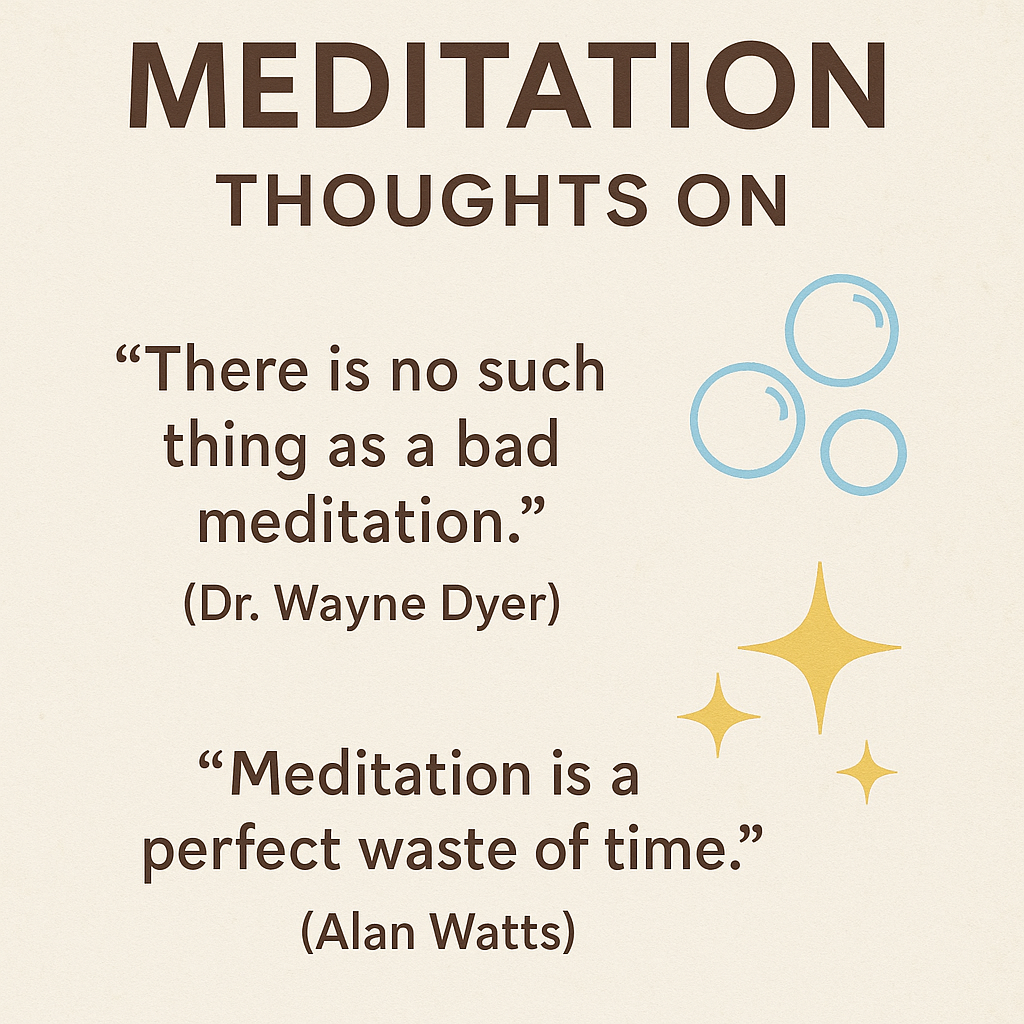
There is no such thing as a bad meditation.
Dr. Wayne Dyer
This line comes from Dr. Wayne Dyer’s Ten Secrets for Inner Peace and Success. I return to it often because, like many people, I sometimes question whether I’m doing meditation “correctly.” Even in formal meditation or body scan meditation, my mind wanders. Thoughts appear, I critique them, and then I critique myself for critiquing them. For a long time, this cycle made me believe I wasn’t doing mindfulness practice well.
But this phrase reminds me that meditation begins exactly where you are. When the mind wanders, that isn’t failure—it’s part of the practice. Research suggests that noticing bodily sensations, physical tension, and wandering thoughts is a core component of mindfulness-based approaches like mindfulness-based stress reduction and mindfulness-based cognitive therapy. Scientific research, including systematic review and meta-analysis studies, shows that simply observing the mind without judgment has health benefits and can support pain management, lower stress, and improve daily life.
Even the judgmental thoughts are normal signals of the human mind. Thoughts pass like small bubbles on a stream, and the goal is not to eliminate them but to develop mindful awareness of them. This mindset has also shaped the way I approach therapy sessions and mental health work, whether I’m supporting young adults, helping people reduce stress, or using mindfulness techniques to help clients reconnect with their breath, body sensations, and sense of inner calm.
Meditation is a perfect waste of time.
-Alan Watts
When Alan Watts described meditation as “a perfect waste of time,” I first laughed, but the more I thought about it, the more meaningful it became. In everyday life, our minds often ask: What am I doing? What should I be doing? What could I be doing? That pressure shows up in work, relationships, and even mental health. Many of us feel pulled toward productivity—always striving to do more.
Alan Watts flips the idea entirely. He suggests that meditation is valuable precisely because it isn’t meant to produce anything. Practicing meditation invites us to stop, breathe, and sit in a relaxed state without needing a measurable outcome. This perspective aligns with mindfulness meditation practices, loving kindness meditation, mantra meditation, and even simple guided imagery exercises. In behavioral medicine and clinical psychology, this shift is one reason meditation and mindfulness practices are considered helpful complementary supports to other treatments.
This mindset expands beyond meditation. It influences creative work, writing, therapy sessions, sacred texts, and how we treat ourselves in moments of stress. Sometimes the most meaningful insights come not from effort, but from allowing space for stillness—a few moments where nothing is required.
🌼 Why Meditation Helps Us in Everyday Life
A growing body of scientific research, including data from the National Health Interview Survey and various systematic reviews, shows that meditation and mindfulness-based practices support well-being in ways people feel throughout everyday life. Meditation helps reduce stress, improve sleep quality, support better sleep, and strengthen the immune system. Mindfulness-based interventions can help people manage symptoms connected to chronic pain, heart disease, or high blood pressure. These meditation and mindfulness practices teach individuals to observe body sensations, shift into a relaxed state, and become more aware of how the body feels in moments of discomfort.
Whether you’re new to the practice or have explored other forms like loving kindness, focused attention, or body scan exercises, meditation and mindfulness-based approaches offer a mindful community of support. Guided meditation, calming music, or simply taking a few minutes of quiet can help bring attention back to the present moment, and research suggests these small pauses can transform long-term well-being. Meditation helps us build mindful awareness, deepen emotional regulation, and reconnect with the body in compassionate, healing ways.
✨ Closing Thought
These phrases remind me that meditation isn’t about performance. It’s about presence, curiosity, and being gentle with yourself as you return to the breath. Whether your mind wanders or settles, whether the practice feels effortless or challenging, each session strengthens mindful awareness and nudges you back toward yourself. There truly is no such thing as a bad meditation—only moments where you learn, notice, and return.