
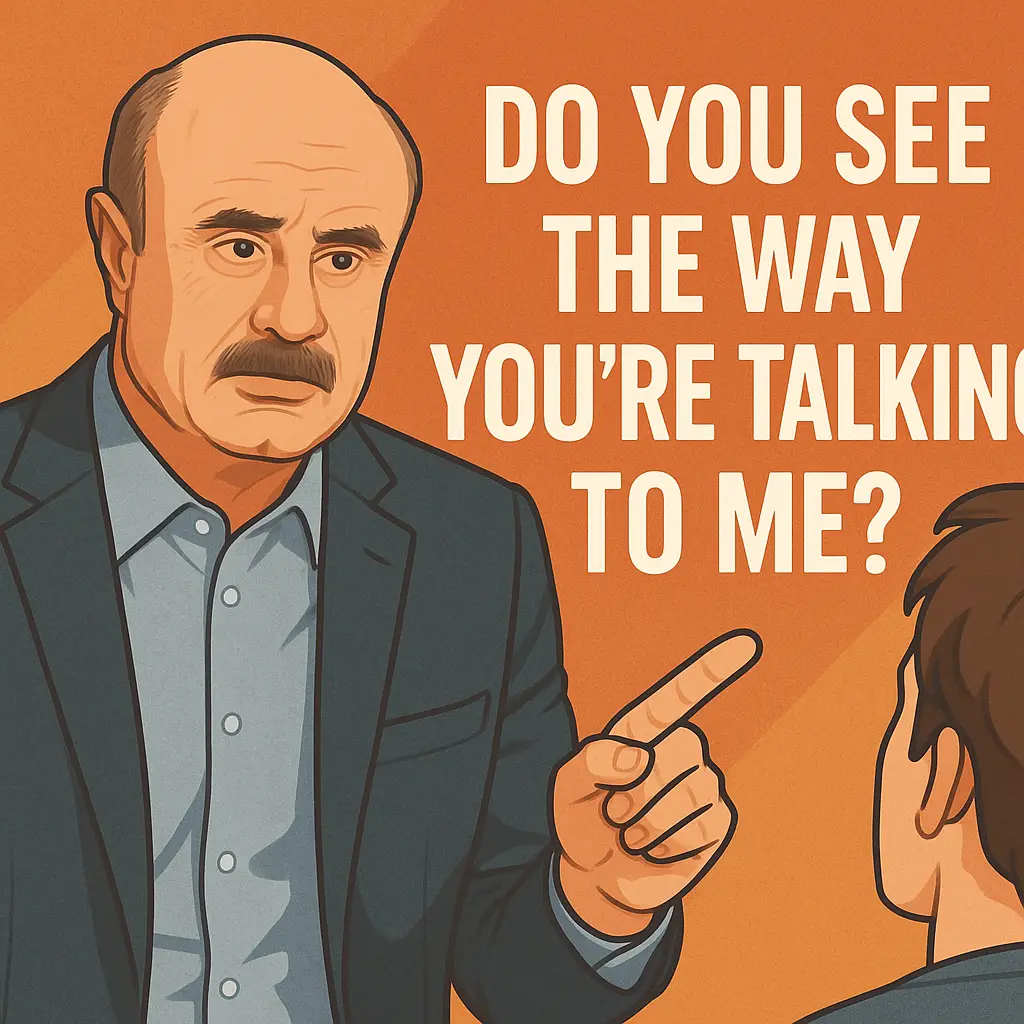
I recently came across a moment of communication that really captured something important about how people talk, listen, and respond to one another. It was a short YouTube clip of Dr. Phil talking with Bam Margera, the famous skateboarder. Bam was in a heated moment, pointing at his wife and saying, “I told you to leave me alone.” Dr. Phil let him finish, paused, and then quietly asked, “Do you see the way you’re talking to her right now?”
That simple question immediately made me reflect on how often we overlook the observing self—the part of us that can step back and notice what’s happening in the moment. When Dr. Phil said that, it wasn’t loud or shaming. It wasn’t a judgment of Bam’s emotions. It was an invitation to pay attention.
And it stopped me in my tracks too.
It reminded me how powerful it can be when someone helps you recognize your behavior in context without attacking you. It’s a kind of communication skills technique that brings greater understanding without sparking defensiveness. I tucked that phrase away and thought about how it could help my clients, especially those who feel stuck in patterns of stress, anxiety, or conflict.
Why This Works
Most of us have tried to set boundaries at some point: “Please don’t yell at me,” “I’d like to be treated with respect,” or “This conversation doesn’t feel productive.” But when someone is overwhelmed by their own thoughts or emotions, those requests often go unheard. The person may not be aware of their tone or the physical sensations in their body that are fueling the moment.
What makes “Do you see the way you’re talking to me right now?” so effective is that it encourages noticing rather than controlling. It shifts the focus from the content of the words to the process behind the words. Instead of you saying, “Stop talking to me that way,” you’re simply helping them notice what’s happening.
It activates the self-as-context perspective taught in Acceptance and Commitment Therapy. ACT encourages people to step back, observe their inner world, and see thoughts, feelings, and bodily reactions as experiences—not instructions. When people learn to observe themselves, their ability to respond improves. They can shift perspectives, recognize their behavior, and imagine how the other person might hear them. It’s a small but powerful exercise in self-awareness.
Accountability in Real Time
I know I’ve had moments where I wasn’t fully aware of how I sounded. My mind might have been busy with planning the future, replaying the past, or wrestling with all the thoughts crowding in. If someone gently asked me, “Do you see the way you’re acting right now?” I would pause. It wouldn’t shame me; it would help me understand my own actions with more clarity.
That’s why Dr. Phil’s comment resonated with me. He didn’t judge. He didn’t shame. He simply invited Bam to observe. And once a person becomes aware, their ability to shift, reflect, and take responsibility becomes much easier. It’s a real-time moment of psychological flexibility—one of the core qualities that helps people manage stress, anxiety, and complicated emotions.
The Observing Self and Psychological Flexibility
In therapy, I’ve seen how valuable it is when people learn to step into the role of the observer. When clients begin noticing their thoughts, physical sensations, reactions, and patterns, something changes. They begin to develop a kind of wisdom that isn’t about controlling the world, but about understanding what’s happening inside themselves.
ACT uses questions like:
- Who notices this thought?
- Can you step back and observe this feeling?
- How old is this story?
- What would I see you doing if I were there with you?
- How does your body respond in this moment?
These questions aren’t about judging or criticizing. They help a person explore their internal experience with curiosity and acceptance. When people understand themselves this way, they’re better able to communicate, listen, and stay grounded—even in difficult relationships or stressful conversations.
A phrase like “Do you see the way you’re talking to me right now?” does something similar. It doesn’t demand change. It creates a moment of awareness—a small pause where the person can reconnect with the part of themselves that observes rather than reacts.
Using This in Everyday Life
I’ve tried this line in my own relationships and in moments where communication was breaking down. It doesn’t magically fix everything, but it opens a door. It slows people down. It asks them to notice. And in that tiny pause, the conversation can shift. People begin to hear the meaning behind your words rather than reacting to them.
Sometimes, people simply don’t realize how they sound. They might be caught up in stress, tangled in anxiety, or overwhelmed by emotion. They might be stuck in a story about themselves or the world that blinds them to what’s happening right now.
That’s why this technique is so helpful—it’s not aggressive, controlling, or confusing. It gently guides the other person back to awareness. And once they’re aware, they can recognize what needs to change.
Final Thought
We all want connection. We all want to be seen, heard, and understood. But often, we move through conversations without noticing the tone, the language we use, or the emotional patterns driving us. The next time someone speaks to you in a way that doesn’t feel right, consider asking—not accusing—“Do you see the way you’re talking to me right now?”
It may be the moment of insight that shifts the entire conversation. It may be the mirror someone needs to understand themselves a little better. And ultimately, it may help both people move toward a more respectful, grounded, and meaningful way of relating.