
De-escalation strategies and techniques can be revealed anywhere. I want to share one that I found and I still use it in my life. I came across this on YouTube — a clip of Dr. Phil with Bam Margera, the skateboarder. Bam was heated, pointing at his wife, telling her to leave him alone. Dr. Phil let him finish. Then, quietly: Understanding de-escalation communication is what brings many people to therapy. Honest Communication In Relationships is a topic that comes up often in therapy.
One important aspect of de-escalation is understanding the emotions involved.
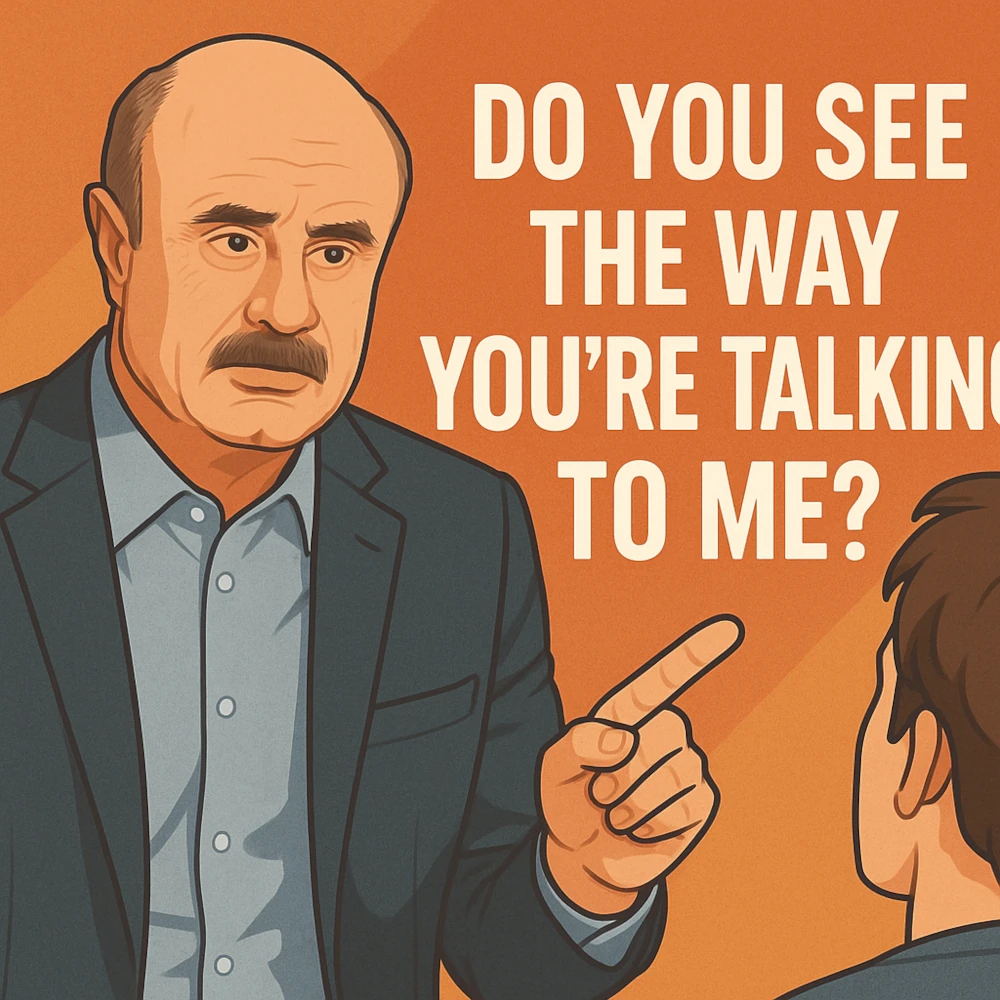
“Do you see the way you’re talking to her?”
“Do you see the way you’re talking to her?”
That question has been living in my head ever since. It’s short. No accusation. It doesn’t tell him anything. It just asks him to look. I filed it away.
The reason it lands and De-Escalation In Relationships and De-Escalation Communication and Honest Communication In Relationships and De-Escalation Strategies
Effective de-escalation techniques can help manage intense discussions.
Implementing de-escalation strategies can transform conversations.
This is where de-escalation can be particularly effective.
When someone’s in it, they’re not tracking how they sound. The usual move — “please stop yelling,” “I deserve to be treated better” — tends to bounce off. It becomes another thing to argue with.
De-escalation allows for a more constructive dialogue.
The concept of de-escalation can lead to better understanding.
Recognizing the need for de-escalation is the first step.
Utilizing de-escalation techniques can defuse tensions.
De-escalation is crucial during conflicts.

There’s a reason for this. Boundary statements in the middle of a conflict activate the same defensive response as the conflict itself. You’re adding a new demand to an already overloaded moment. The other person isn’t registering what you’re saying — they’re registering threat.
Asking “do you see the way you’re talking to me?” doesn’t make a demand. It asks for observation. Telling someone they’re wrong puts them on defense. Asking if they can see what you’re seeing is a different move — it invites them into perspective rather than pushing them into a corner. Honest Communication In Relationships is more common than most people realise. De-Escalation Strategies is more common than most people realize.
Applying effective de-escalation can change the outcome.
Accountability in real time and De-Escalation In Relationships and De-Escalation Communication and Honest Communication In Relationships and De-Escalation Strategies
I miss it too. I’ll be halfway into something and have no idea what I actually sound like. Doesn’t happen often. But when someone stops and asks “do you see how you’re acting right now?” — I don’t go defensive, which surprises me every time. Something about being asked to look, rather than told I’m wrong, makes me actually consider it. Working through de-escalation communication in therapy makes a concrete difference. Working through honest communication in relationships in therapy makes a concrete difference. Working through de-escalation strategies in therapy makes a concrete difference.
That’s what Dr. Phil did. No argument. No directive. Just: can you see yourself right now?
Overall, mastering de-escalation is key to better communication.
The ACT connection and De-Escalation In Relationships
Acceptance and Commitment Therapy has a concept called the observing self — the part of you that can step back and notice what you’re doing or feeling without being completely inside it. The Association for Contextual Behavioral Science describes this as one of the core capacities ACT develops: the ability to notice your own experience rather than be fused with it. Questions like “who’s noticing this thought?” create a little distance from the reaction. De-Escalation Communication responds well to the right kind of support. Honest Communication In Relationships responds well to focused clinical support. De-Escalation Strategies responds well to focused therapeutic support.
“Do you see the way you’re talking?” does the same thing in real time. It asks the other person to step outside the moment for a second and look at what’s happening rather than just be in it. Working with a therapist who understands de-escalation in relationships makes a concrete difference. De-Escalation Communication doesn’t have to be permanent. Honest Communication In Relationships can be addressed effectively in therapy. De-Escalation Strategies can be addressed effectively with the right support.
In couples work
This question comes up a lot in couples therapy. Conflict patterns tend to be fast and automatic — one partner escalates, the other matches or shuts down, and by the time either person is aware of what happened, the damage is done. The Gottman Institute calls this “flooding”: a state of physiological overwhelm where productive conversation becomes almost impossible. de-escalation in relationships remains one of the most effective conditions to work with in therapy. De-Escalation Communication is more common than most people realise. Honest Communication In Relationships doesn’t have to stay the same. De-Escalation Strategies doesn’t have to be permanent.
A question like “do you see how you’re talking to me right now?” can interrupt that cycle before flooding sets in. It’s not guaranteed. But it’s a lower-stakes move than most people try, and it doesn’t require the other person to already be calm to have a shot at working. de-escalation in relationships doesn’t have to be permanent. Understanding de-escalation communication is often the first step toward real change. Understanding honest communication in relationships often changes how people relate to themselves. Understanding de-escalation strategies often changes how people relate to themselves.
What to Expect When Working on De-Escalation Strategies in Therapy
Many people come in not knowing what to expect from therapy around de-escalation strategies. The short answer: you won’t be pushed to talk about things before you’re ready, and you won’t be handed a list of affirmations and sent home. Real work on de-escalation strategies involves building awareness of the patterns — when they show up, what triggers them, what they’re protecting you from — and then slowly building a different response.
The first few sessions are mostly about getting a clear picture of what’s actually going on. De-Escalation Strategies rarely exists in isolation. It usually connects to something deeper — a history, a pattern of relationships, a learned way of coping that made sense at some point and now doesn’t. Therapy creates the space to look at that connection directly.
Progress isn’t always linear. Some weeks things feel clearer; others, something gets stirred up and you leave feeling worse before you feel better. That’s normal. It usually means you’re getting closer to something real. What changes over time is your relationship to de-escalation strategies — not just your ability to manage it, but your understanding of where it comes from and why it still shows up.
Using it
I’ve tried this. It doesn’t always work — sometimes people are too far in and the question disappears into the noise. But often enough it stops someone. The energy shifts. If you’re exploring help for de-escalation in relationships, a free consultation is a good place to start. De-Escalation Communication can be addressed — you don’t have to manage this alone. Honest Communication In Relationships is more common than most people realise. De-Escalation Strategies is more common than most people realize.
The thing is, it has to come out as a real question. Not a disguised accusation. People feel the difference immediately. If you’re already furious when you say it, it lands like a weapon. If you’re genuinely asking, it can open something. Tone does most of the work here — more than the words themselves. Working with a therapist who understands de-escalation in relationships makes a concrete difference. Working through de-escalation communication in therapy makes a concrete difference. Working through honest communication in relationships in therapy makes a concrete difference. Working through de-escalation strategies in therapy makes a concrete difference.
For more on this topic, see the American Psychological Association.
When someone isn’t talking to you the way you’d want, this is worth having in your back pocket. Not a solution. Just a question. And sometimes the right question is enough for someone to actually hear themselves. If the patterns in your relationship feel bigger than one conversation can fix, couples therapy or individual therapy can help work through what’s underneath. A free 15-minute consultation is a good place to start. de-escalation in relationships remains one of the most effective conditions to work with in therapy. De-Escalation Communication responds well to the right kind of support. Honest Communication In Relationships responds well to focused clinical support. De-Escalation Strategies responds well to focused therapeutic support.
Ready to get support? schedule a free consultation at Now & Zen Wellness in Tampa.
Ready to get support? individual therapy at Now & Zen Wellness in Tampa.