
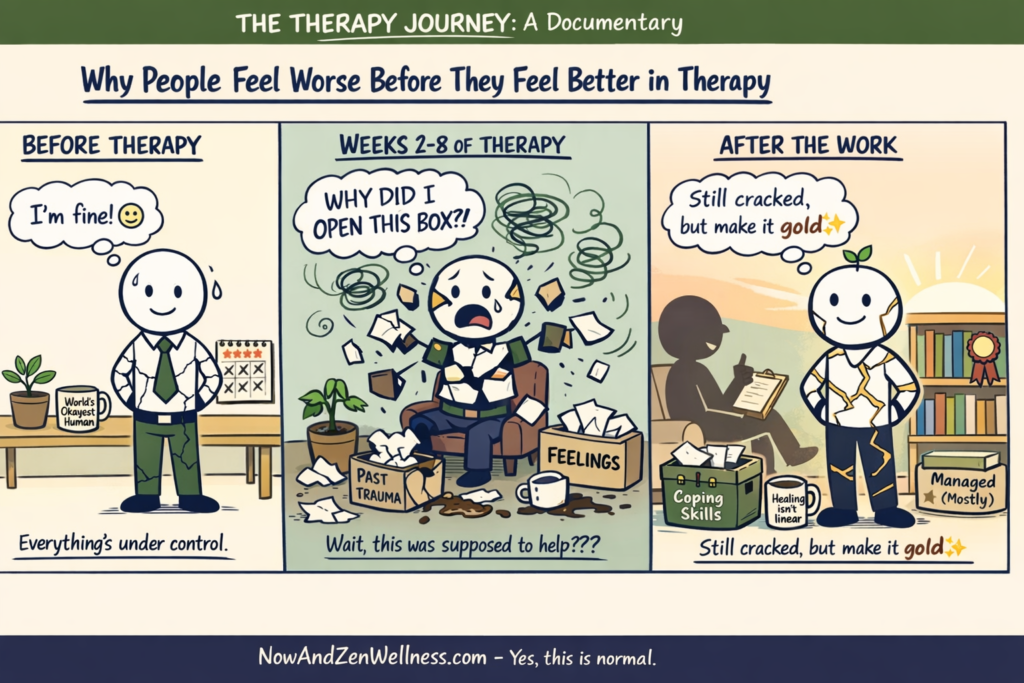
Many people begin therapy hoping for quick relief from mental health problems or overwhelming emotions. So when therapy sessions bring up painful memories, stronger symptoms, or unexpected emotional distress, it may feel confusing or discouraging. Yet this experience is widespread. In fact, feeling worse before you feel better often reflects real therapy progress — the point where more profound healing begins after years of carrying mental health conditions, stress, or unprocessed experiences.
Therapy invites people to examine their mental health on multiple levels, often for the first time in their lives. When someone begins exploring mental disorders, such as past physical or sexual abuse, major depressive disorder, panic disorder, or post-traumatic stress disorder, the body and mind may respond strongly. Emotional discomfort doesn’t mean the treatment is failing. Research shows that early sessions frequently uncover risk factors, traumatic experiences, and psychological factors that were once hidden beneath coping strategies like avoidance, shutting down, or relying on recreational drugs or drug and alcohol use to numb the pain.
When difficult memories resurface—memories involving someone else, a close friend, a spiritual leader, or even blood relatives—feelings can intensify. People may feel depressed, experience depression differently, feel sadness, or recognize how long-standing stress has affected their physical health, sleep problems, chronic pain, or overall well-being. These reactions can feel unsettling, but they are a regular part of adjusting to emotional work. Both the World Health Organization and the American Psychiatric Association note that shifts like these are standard when people begin addressing mental illness or working through emotional distress connected to stressful events, financial strain, or early health challenges.
The early phase of therapy helps individuals understand symptoms, clarify their history, and see how stress, health issues, and life challenges have shaped who they are. This new insight often involves learning how common mental health conditions develop, how to prevent mental health conditions from worsening, and how biological, emotional, and social support systems all interact. People begin discovering protective factors—healthy coping skills, better stress management, new coping strategies, and support from a faith community or trusted relationships.
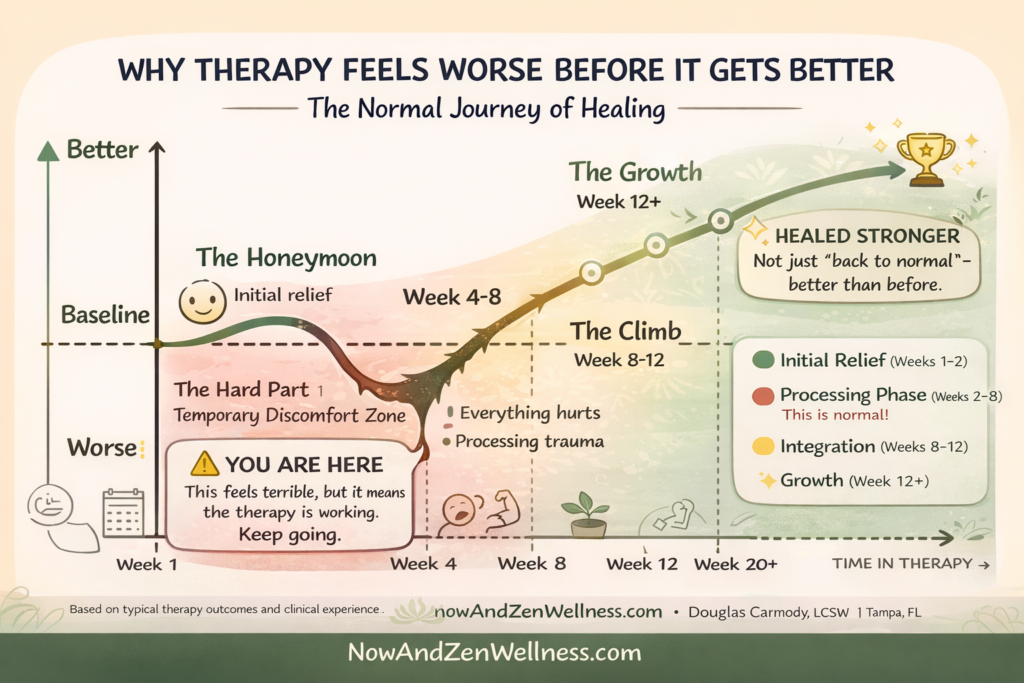
During this stage, individuals may also recognize how negative thoughts, low self-esteem, family history, physical health issues, or income levels contributed to their distress. They may remember times when suicidal thoughts, a suicide attempt, or a need for emergency help felt overwhelming, yet they didn’t reach out. Revisiting these memories can stir up strong emotions. Clients might feel scared, overwhelmed, or even guilty—sometimes for the first time in years. These reactions have meaning; they signal insight, growth, and the early stages of emotional healing.
Therapists use clinical understanding from the Diagnostic and Statistical Manual and the broader statistical manual framework to help clients understand what they are experiencing. This process can initially increase stress, panic attacks, or anxiety because people are confronting their internal reality without old defenses. Many people notice challenges such as irritability, decreased motivation, trouble concentrating, or feeling sad without knowing why. They may worry they are getting worse instead of better.
But over time, the therapeutic process begins to develop healthier pathways—new ways to cope, improved self-esteem, clearer thinking, and stronger emotional regulation. People begin replacing unhealthy patterns with protective factors, healthier habits, and meaningful support systems. They learn how to reduce stress, adapt to stressful situations, and navigate treatment options in collaboration with a mental health professional who recognizes how therapeutic change progresses over time.
As therapy progresses, emotional reactions soften. Stress becomes more manageable. People learn to cope with symptoms, support their mental well-being, and ask for help when they need it. Many discover that most people experience internal shifts long before external improvements appear. That delay between inner change and outward progress is why treatment can feel slow, confusing, or uncertain. But the quiet changes happening inside—greater insight, more self-compassion, and a stronger sense of control—are signs that therapy is working.
Eventually, individuals enter a phase where emotions stabilize. They feel more connected, less overwhelmed, and more capable of handling challenges that once felt unbearable. They begin to understand their personal story, make peace with past experiences, and move toward a healthier, more grounded relationship with themselves and others.
Healing is not linear. It is rarely fast, and it seldom feels comfortable at first. But with support from a skilled mental health professional, most people discover resilience, clarity, and emotional stability as therapy continues. The difficult moments are not failures—they are evidence of movement, courage, and profound internal change.
If therapy feels like it is stirring everything up, know this: You are not alone. You are doing the work. And even when the process feels messy or painful, you are moving toward a future strengthened by insight, connection, and genuine well-being.
Understanding Why Therapy Can Stir Up More Emotions Before Relief Begins
Another essential part of therapy progress involves recognizing how deeply mental health conditions and mental illness shape reactions to stressful situations. Many common mental health conditions—such as bipolar disorder, panic disorder, and major depressive disorder—can intensify when people start exploring past experiences or discussing how specific patterns developed. As clients gain insight into the roots of their mental health problems, they often identify physical reactions, emotional memories, and behavioral habits they previously overlooked or dismissed.
During this stage, individuals might experience feeling sad unexpectedly or notice how financial issues, health problems, or long-term stress create a higher risk for emotional suffering. People are often surprised to learn how income levels, family history, and exposure to traumatic events influence not only symptoms, but also how they respond to treatment over time. Therapy helps make these patterns more straightforward so clients can work toward healthier ways to cope, manage physical responses, and reduce stress in daily life.
Exploring these patterns can also reveal moments involving someone else—whether a partner, parent, or close friend—who contributed to emotional distress. This recognition can temporarily intensify symptoms but also increase insight. A skilled mental health professional will help clients understand how to prevent mental health conditions from worsening and how disease control, lifestyle changes, and early intervention support long-term well-being.
Some individuals confront thoughts of self-harm or memories tied to emotional crises as they work through difficult experiences. While facing these moments can feel overwhelming, therapy provides the structure needed to approach them safely and without judgment. This rapport-building is why consistent treatment and compassionate guidance matter—because they help people understand how mental health conditions develop and how healing unfolds across time.
Therapy also helps individuals identify unhealthy coping patterns that mask painful emotions. When people begin replacing avoidance behaviors with healthy coping strategies, their internal experience shifts. This shift can feel uncomfortable at first because the mind is learning to function without the old, familiar defenses that kept emotions contained.
With steady support, therapy gradually shifts away from managing one crisis after another and toward helping people build resilience, emotional steadiness, and a clearer sense of themselves. Over time, many clients notice that treatment helps them reconnect with their bodies, manage their emotions more effectively, and approach difficult situations with greater confidence. When symptoms flare up for a short time, those changes often signal that deeper work is taking place beneath the surface.
How Understanding Mental Health Conditions Helps People Move Through the Hard Parts of Therapy
As people continue working through therapy, they often begin to understand how mental health conditions shape their reactions and emotional patterns. Gaining clarity about these patterns helps individuals see how common mental health conditions and more complex mental disorders have influenced their coping styles, relationships, and ability to manage overwhelming emotions. Many clients realize that the mental health problems they struggled with quietly for years were not personal failures but natural responses to stressful experiences that never had space to be processed.
Therapy allows a person to explore these symptoms in a safe, structured way. This stage of treatment can surface emotional distress, fears of relapse, or memories of panic attacks or self-harm that clients once pushed aside. Although these moments can feel intense, learning how to reduce stress and regulate the body’s responses helps people regain a sense of control. These skills also play a key role in preventing mental health conditions from worsening over time. It also supports the broader goal of assisting individuals in preventing mental health conditions from worsening over time.
Understanding disease control is also part of this work. Although many people associate the term with physical health, it also describes emotional well-being. People learn how unaddressed mental disorders can create ripple effects that show up as physical symptoms, sleep disruption, or difficulty managing daily responsibilities. By viewing their health through this wider lens, clients begin to recognize how closely the mind and body are connected.
Over time, people start to see how their challenges fit into a bigger picture that they can improve, understand, and heal with consistent therapeutic support. Therapy allows them to identify what contributes to emotional suffering, what strengthens resilience, and what steps support long-term healing. As people learn more about their mental health conditions, they become better able to create meaningful change, enhance their coping strategies, and work toward a life with greater stability, clarity, and emotional connection.