Douglas Carmody

Douglas Carmody, LCSW, is a licensed clinical social worker and the founder of Now & Zen Wellness in Tampa, Florida. He specializes in evidence-based therapeutic approaches including EMDR, Cognitive Behavioral Therapy (CBT), Acceptance and Commitment Therapy (ACT), and Dialectical Behavior Therapy (DBT). Douglas is dedicated to helping individuals and families navigate anxiety, trauma, depression, stress, relationship challenges, and life transitions with clarity and compassion. With a background in both clinical practice and holistic wellness, Douglas blends mindfulness, neuroscience, and practical coping skills to help clients develop emotional balance and long-term resilience. His approach is grounded, supportive, and deeply client-centered—focused on helping people reconnect with their values, build confidence, and create meaningful change. Through Now & Zen Wellness, Douglas provides both in-person and telehealth sessions, along with educational content aimed at reducing stigma and empowering the community to prioritize mental and emotional well-being.

Illustration showing balanced decision-making between inpatient addiction treatment and personalized outpatient care

Inpatient Treatment: Consider This Before You Choose a Rehab Program

Choosing inpatient treatment for addiction is a major decision — and it’s not always the right first step. Learn how ASAM criteria guide ethical level-of-care decisions, when residential rehab is truly needed, how dual diagnosis and sober-living options fit into recovery, and how to choose the right treatment path without unnecessary cost or disruption.

Inpatient Treatment: Consider This Before You Choose a Rehab Program Read More »

Man appearing calm on the outside with a transparent overlay showing inner panic and anxiety, representing high functioning anxiety

High-Functioning Anxiety: When You Look Fine but Feel Like You’re Drowning

High functioning anxiety can look like success on the outside while feeling like constant pressure on the inside. This article explores how anxiety disorders can hide behind productivity, the symptoms that often go unnoticed, and effective ways to find relief before burnout takes over.

High-Functioning Anxiety: When You Look Fine but Feel Like You’re Drowning Read More »

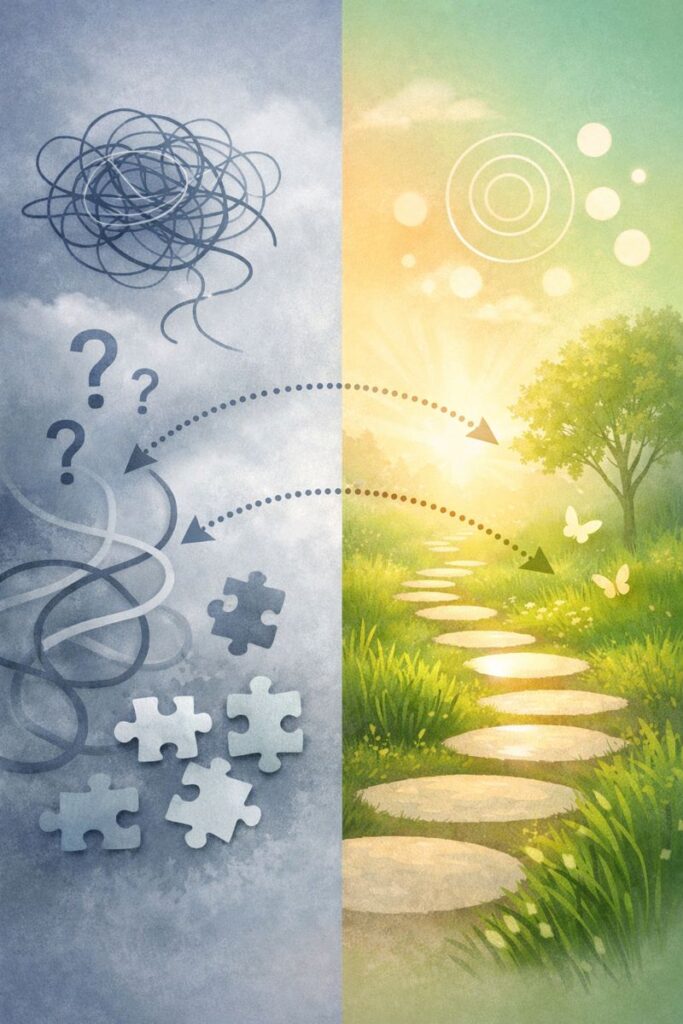
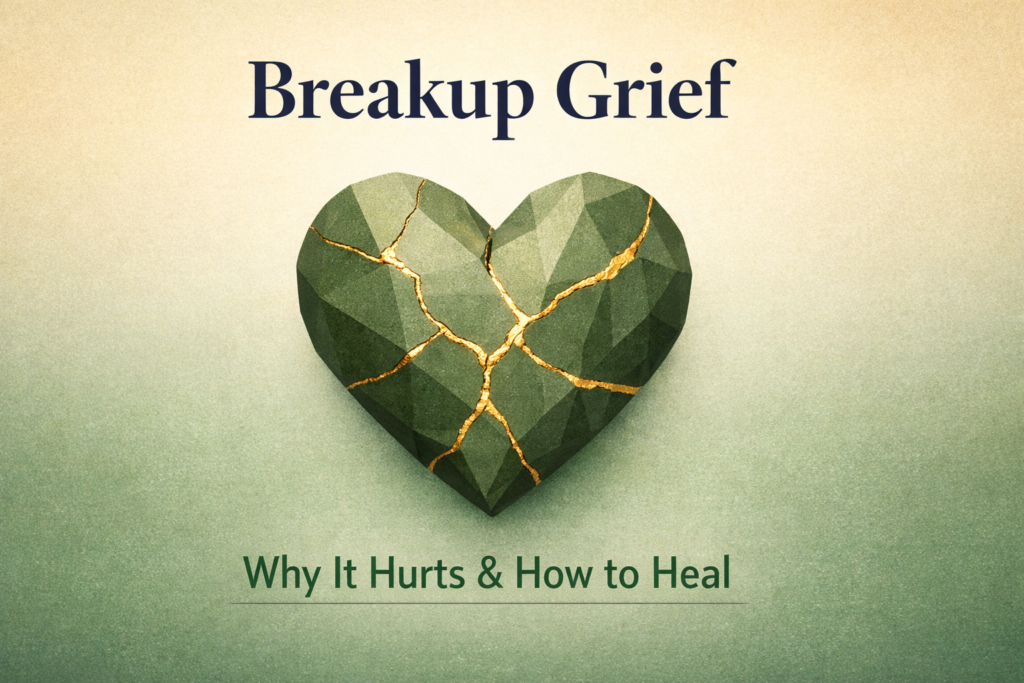
Breakup grief and emotional healing after the end of a relationship

Breakup Grief: Why It Hurts So Much (And How to Heal)

If you’re going through breakup grief and it feels like someone died, that’s because—neurologically speaking—something did die. The future you imagined, the person who knew your coffee order and understood your past, the daily reality that structured your entire life—all of it, gone.
Breakup grief is real grief. It’s normal to feel like your world has ended, even if friends and family don’t understand. Your broken heart isn’t being dramatic. Your nervous system is responding to a profound loss the same way it would process an actual injury. The pain is real, the grieving process takes time, and you’re not the only person who feels this way.
This isn’t about “getting over it” quickly or “moving on” before you’re ready. This is about understanding why painful breakups hurt so much, learning self care tips that actually help, and finding your way toward moving forward when you’re ready to create a new life.

Breakup Grief: Why It Hurts So Much (And How to Heal) Read More »

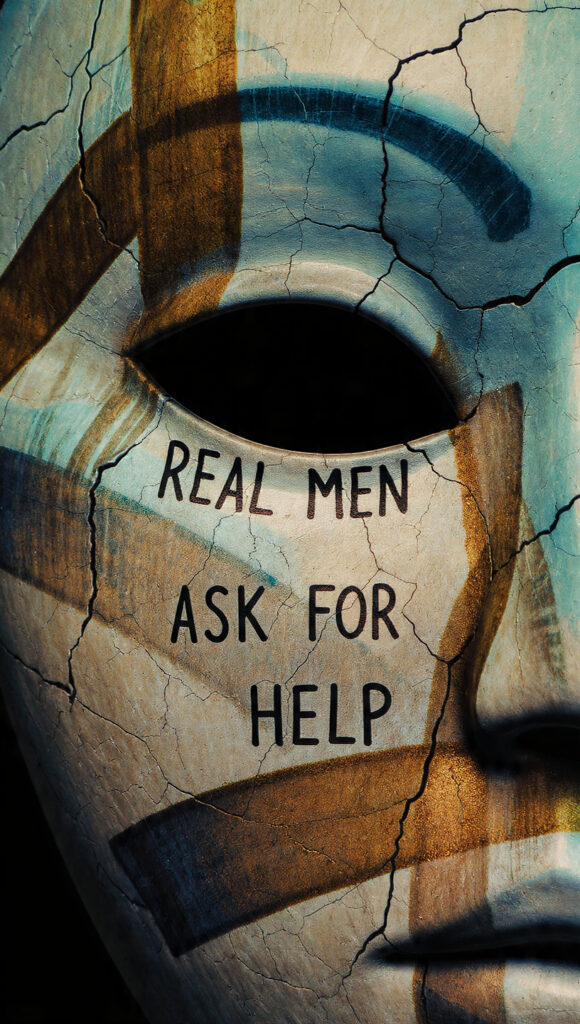
Photo of a sign that says “Real Men Ask for Help,” representing men’s mental health and the importance of vulnerability.

Why Men Struggle to Ask for Help (And How to Change That)

Here’s a fun fact that’s not actually fun at all: men are nearly four times more likely to die by suicide than women, yet they’re significantly less likely to seek mental health treatment. If that math doesn’t make sense to you, welcome to the paradox of men’s mental health.
The statistics are sobering: 75% of suicides in the United States are men, yet only 1 in 3 men who experience mental health issues will seek professional help. We’ll wait until the house is actively burning down before we even consider calling the fire department. And sometimes not even then.
But here’s the plot twist: when men actually do reach out for help, they report overwhelmingly positive experiences. The catastrophe they imagined? It doesn’t materialize.
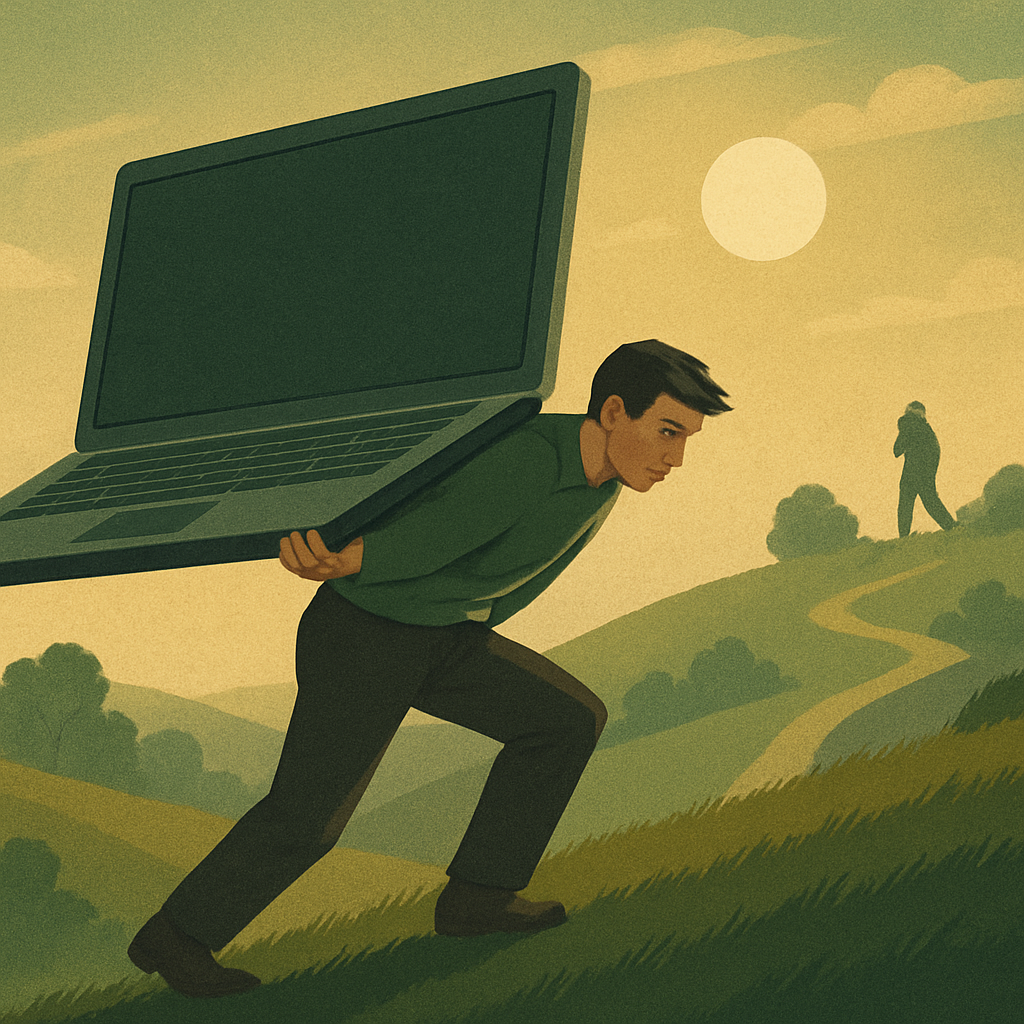
“I spent literally years dreading making that first appointment,” says David, 38, now six months into CBT. “I had this whole narrative in my head about how it would feel weak or embarrassing. The actual experience? Felt like finally setting down a backpack I’d been carrying for way too long. Honestly, my only regret is not doing it sooner.”
If you’re reading this and thinking “yeah, but I’m fine,” consider: would you really be reading an article about men’s mental health if everything was fine? Asking for help isn’t giving up. It’s growing up.

Why Men Struggle to Ask for Help (And How to Change That) Read More »

chatgpt image dec 2, 2025, 11 16 37 pm

What Problematic Porn Use Really Looks Like (And What It Isn’t)

Porn addiction is not a moral failure—it’s a complex cycle of brain chemistry, trauma, and emotional avoidance. This compassionate guide clarifies the difference between compulsion vs. addiction, explores the role of shame in the cycle, details how it impacts relationships, and outlines effective, shame-free treatment paths like group and individual therapy for real healing.

What Problematic Porn Use Really Looks Like (And What It Isn’t) Read More »

recoverycoachthumb

Lessons From Recovery Coaching: How Compassionate Communication Transforms Healing

Working as a recovery coach taught me that real change doesn’t come from power struggles—it comes from compassion, communication, and understanding. Whether someone is navigating dual diagnosis, substance use, depression, or emotional overwhelm, support matters more than pressure. By listening, creating connection, and seeing the person behind the symptoms, we help them step toward healing, one honest conversation at a time.

Lessons From Recovery Coaching: How Compassionate Communication Transforms Healing Read More »

selfcareblogthumbnail

Self-Care: More Than Just a Buzz Word

Self-care isn’t pampering—it’s survival. It’s the daily practice of maintaining your physical health, mental health, and emotional balance so you can show up fully in your life. From the oxygen mask principle to relapse prevention, self-care is how we reduce stress, prevent disease, and stay grounded in a world that constantly pulls at our energy. This article explores what self-care really means, how culture shapes it, and why it’s essential for long-term wellbeing.

Self-Care: More Than Just a Buzz Word Read More »